How to Measure AI Visibility in 2026 (Free Tools and Gaps)
Google and Microsoft now report AI visibility for free—but no single tool shows the whole picture. Here is the full stack, what each tool misses, and where prompt tracking still wins.
How to Measure AI Visibility in 2026 (Free Tools and Gaps)
As of June 2026, you can measure AI visibility for free, but no single tool shows the whole picture. Google Search Console now reports impressions inside AI Overviews and AI Mode. Microsoft Clarity reports citations across Copilot. Neither shows clicks, neither covers the other, and Google left Gemini out entirely. The full stack is five disconnected tools. The advantage is not the data. It is the routine that turns it into decisions.
Quick check: want to see how your brand shows up across every AI engine, not just one? Run a free Book an Intro.
📋 TL;DR
As of June 2026, you can measure AI visibility for free, but no single tool shows the whole picture. Google Search Console now reports impressions inside AI Overviews and AI Mode. Microsoft Clarity reports citations across Copilot. Neither shows clicks, neither covers the other, and Google left Gemini out entirely. The full stack is five disconnected tools. The advantage is not the data. It is the routine that turns it into decisions.
What changed in AI visibility measurement in 2026?
In one week, AI visibility went from a science experiment to a metric the largest search platforms report natively. On June 3, 2026, Google launched dedicated Search Generative AI performance reports in Search Console, covering AI Overviews, AI Mode, and generative AI in Discover. Microsoft Clarity shipped its Citations dashboard a few weeks earlier.
For two years, the only way to see how your brand appeared inside AI answers was to run the prompts by hand. A category formed to automate that. Profound and others turned prompt measurement into a product, and the momentum has since swung toward agentic workflows—tools that write and act on your behalf, the AirOps lane. We are betting the other way. Native reporting from the platforms does not make measurement less important. It raises the stakes. When Google and Microsoft both build first-party reporting for the same thing, the question stops being "is this real" and becomes "how do I see all of it." That second question is a measurement question, and it is the hard one. We situate that shift in the full 2026 generative engine optimization landscape.
What does the full AI visibility stack look like?
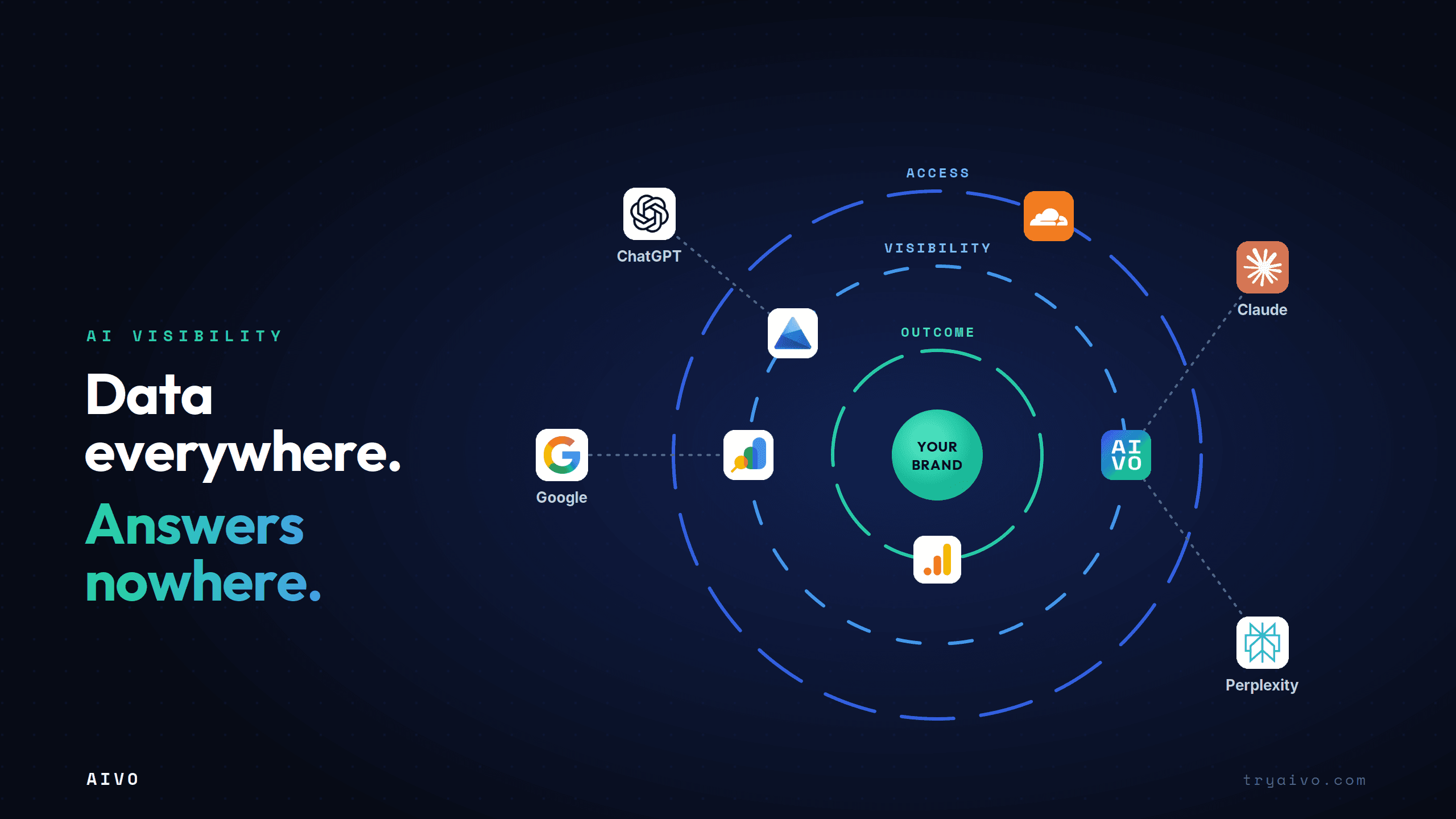
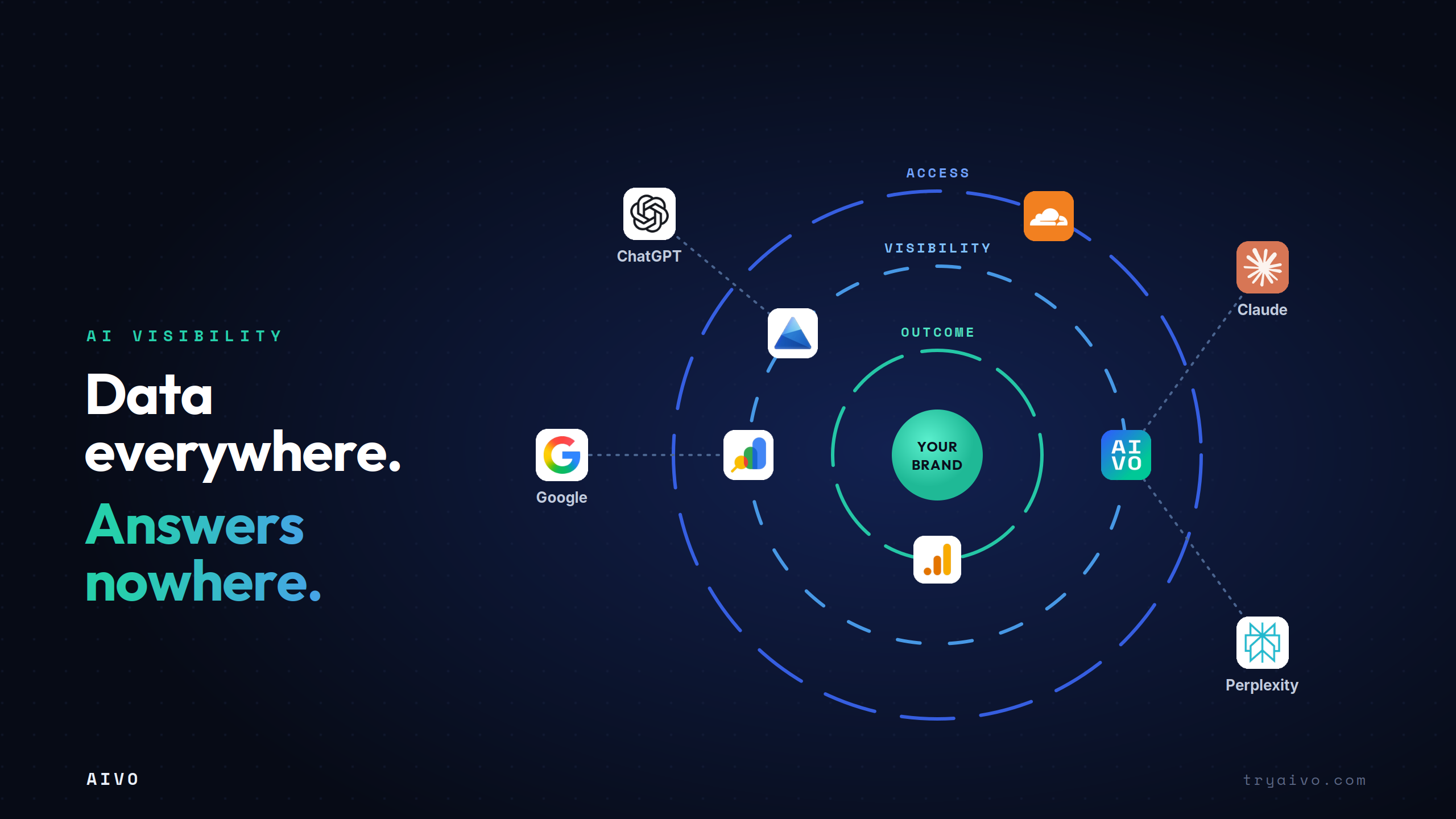
The full stack is four or five separate tools, each answering a different question, none connected. Here is the map, from access to outcome.
| Layer | Tool | Question it answers | Blind spot |
| Access | Cloudflare | Can AI crawlers reach you? | No visibility or ranking data |
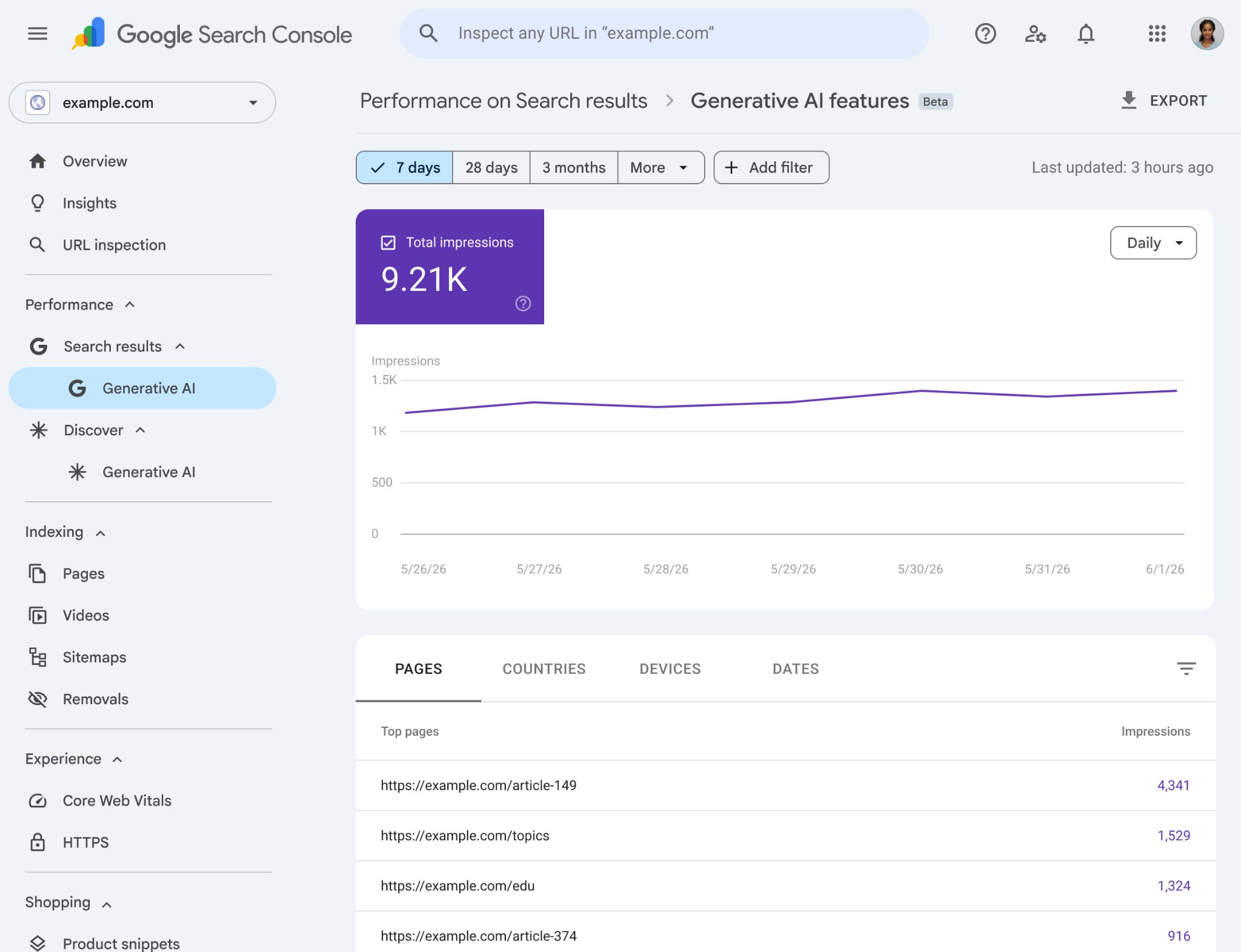
| Visibility | Google Search Console | Do you appear in Google AI features? | Impressions only, no Gemini |
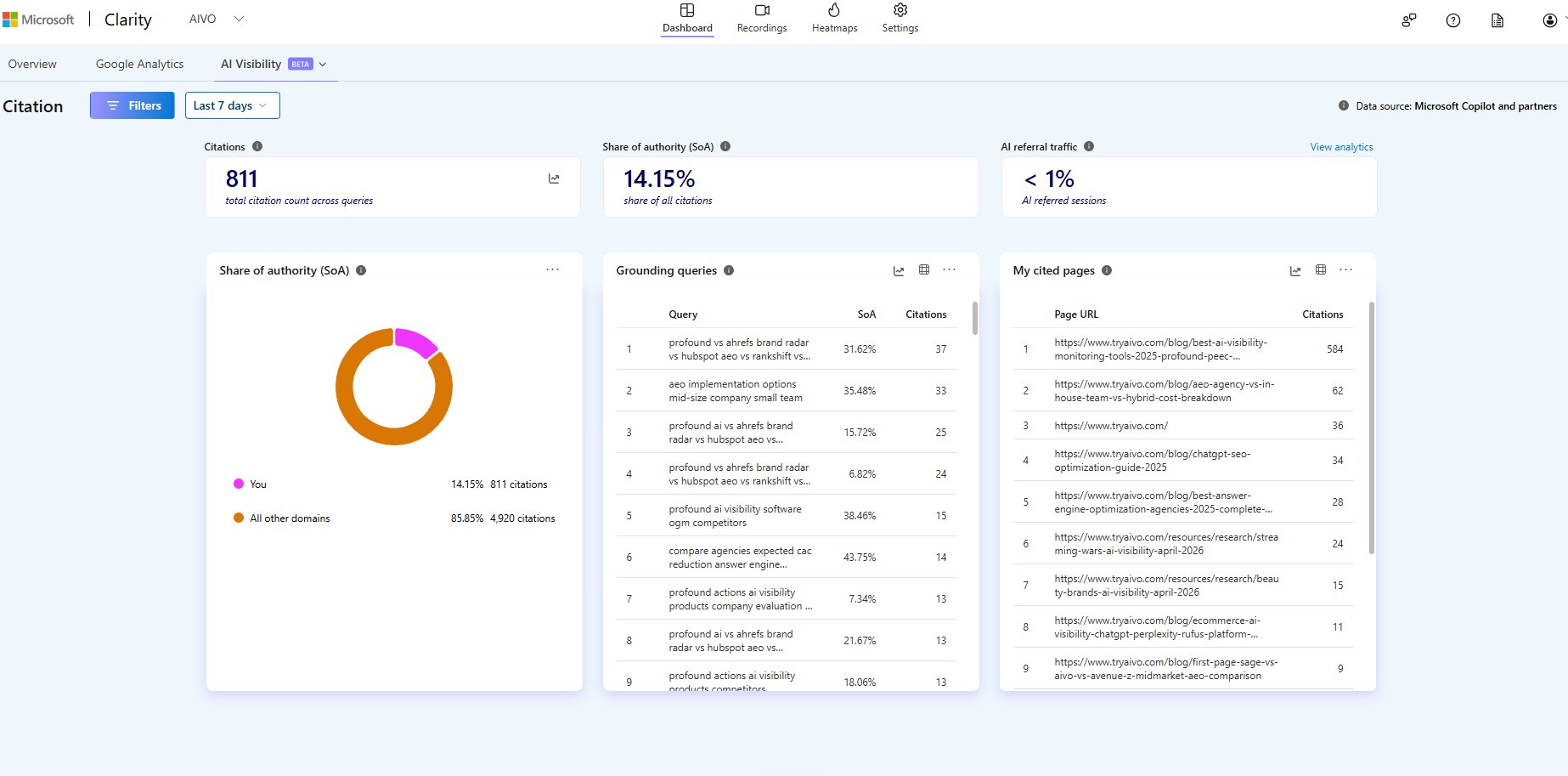
| Visibility | Microsoft Clarity | Are you cited across Copilot, Bing, and ChatGPT (via Bing)? | No Gemini, Perplexity, Claude, or Google AIO |
| Outcome | Google Analytics 4 | Did it send traffic and conversions? | Only sees clicks, and AI sends few |
| Reconnaissance | Prompt tracking | Where do you rank vs competitors, everywhere? | Manual, does not scale alone |
Layer 1, visibility. Google Search Console reports your impressions inside Google's AI features. Microsoft Clarity reports your citations across the Microsoft ecosystem and adds a share of authority view so you can see which domains win the citations you do not. This is the part that gets missed. Clarity does not just cover Copilot. It covers Bing's AI surfaces and ChatGPT whenever ChatGPT grounds its answer through Bing, which is most of the time it searches the web. So Clarity is a real first-party window into ChatGPT citations, not only Microsoft's own assistant. What it does not see on the citation side is Gemini, Perplexity, Claude, or Google's AI Overviews, and it misses the slice of ChatGPT that searches without Bing.
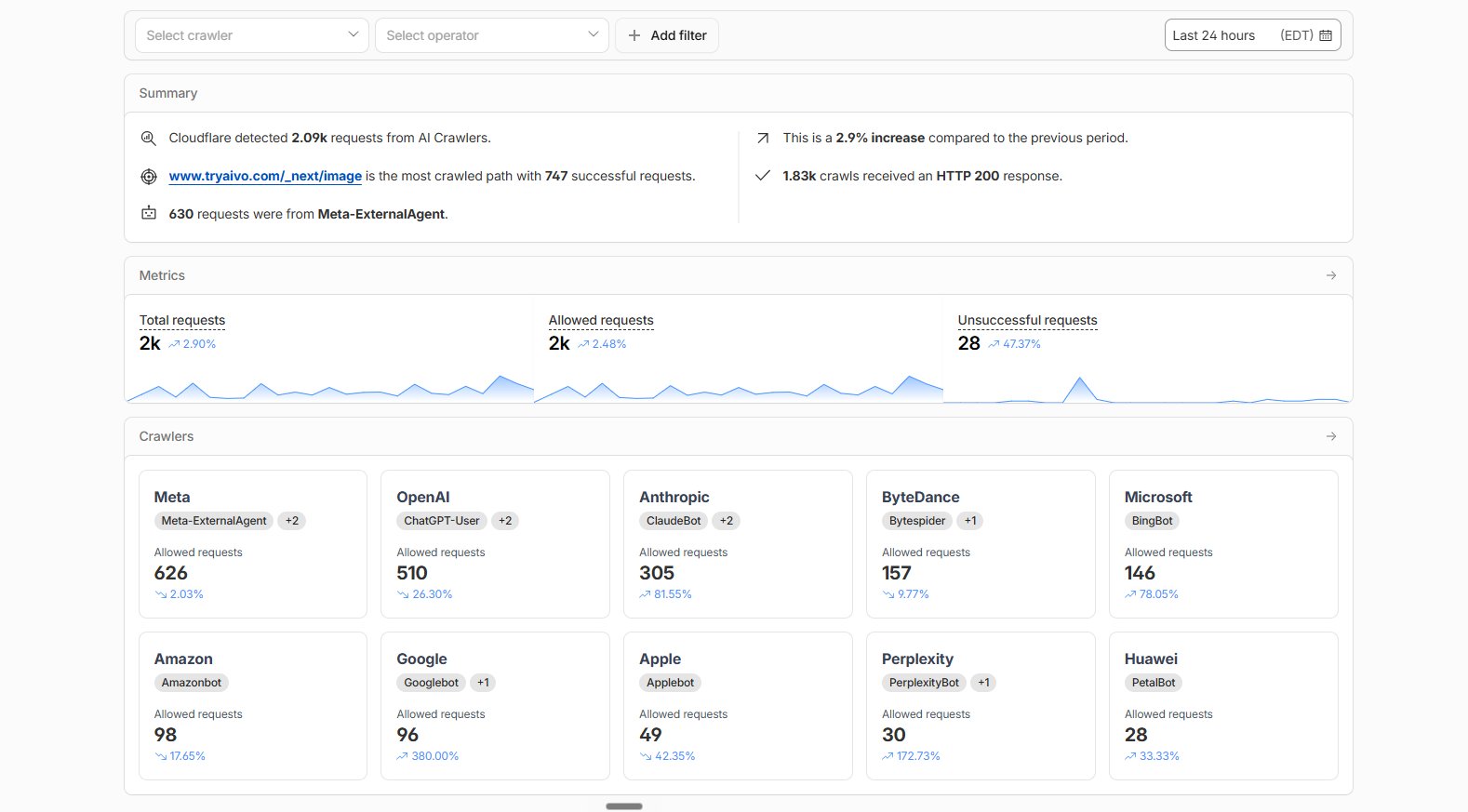
Clarity also folds in Cloudflare bot activity. Inside the same dashboard you can see which AI crawlers are hitting your site (OpenAI, Anthropic, Google, and others), their share of your traffic, and a scrape-to-referral ratio. That matters more than it sounds. In Cloudflare itself the bot view is narrow, roughly the last 24 hours in hourly slices, and it lives in a console where one wrong toggle can break your email, DNS, or security rules. Clarity shows the same Cloudflare data as a trend over time, in a place a marketer can actually use without touching anything load-bearing. So the access and visibility layers are not just consolidating on the Microsoft side—they are becoming safe for the people who care about visibility to read.
Layer 2, outcome. Impressions are not outcomes. Google Analytics is where you check whether visibility turned into traffic. That is its own fight, because AI answers tend to satisfy the user in place and send fewer clicks, not more. See why GA4 still cannot see most AI traffic for the setup workarounds.
The picture is shifting, not static. The Microsoft side is consolidating, with Clarity now pulling Cloudflare bot activity and Copilot citations into one place. Google's Search Console sits on its own. So you have fewer logins than a year ago, but still two ecosystems that do not talk to each other, plus the chat assistants—ChatGPT, Perplexity, Claude, and Gemini—which report nothing at all.
If you are already juggling these dashboards and they do not add up, that is what we help with. Book a free 30-minute initial consultation and we will walk you through how your brand compares to competitors across every AI engine—not just one platform's report.
Why isn't first-party data enough?
First-party data is real but deliberately partial, so it cannot stand alone. Google's report is impressions only. No click data, no query data, and every link inside an AI Overview shares a single position, so you cannot tell which placement does the work. It is rolling out to a subset of UK sites first, with data starting in mid May 2026.
The biggest gap is Gemini. Google built visibility reporting for AI in Search and left its own flagship assistant out of the picture. Clarity has its own edges. Its citations cover the Microsoft ecosystem—Copilot, Bing's AI surfaces, and ChatGPT through Bing grounding. It does not cover Google's AI Overviews, Gemini, Perplexity, or Claude, and it cannot see the slice of ChatGPT that searches without Bing.
So each platform hands you a view of its own surfaces and walks away. The data got more available the same week the picture got harder to assemble.
Is prompt tracking still relevant in 2026?
Yes. Prompt tracking is not dead—it changed jobs. It used to be your only window. Now it is your reconnaissance layer, the way you see surfaces and competitors that first-party data will never show you.
Think of it as conquesting. First-party reports show you your own house. Prompt tracking shows you everyone else's. When a buyer asks about your category, who gets named—you or three competitors? Are you winning in Copilot but invisible in Gemini, the engine Google left out of its report? Impressions cannot answer that. Running the prompts can.
In our work at AIVO, we run every prompt three times per engine before trusting a result. A single pass produces ranking inversions that vanish on repeat, so one-shot prompt checks lie to you more than they help. That discipline is the difference between reconnaissance and noise. The move is not to drop prompt tracking. It is to combine it with the owned reports so you see the surfaces you control and the ones you do not. For how engines choose what to cite in the first place, see how AI engines decide what to cite.
How do you turn the stack into a weekly routine?
Pick a fixed cadence and attach an action to every signal, or the free data just becomes five dashboards you ignore. Here is the routine we run.
Weekly, fifteen minutes:
- Cloudflare: confirm AI crawlers are getting through, not blocked.
- Search Console: check the AI impressions trend and top cited pages.
- Clarity: watch for share of authority shifts against competitors.
- GA4: note any assistant referral traffic.
Then each signal triggers an action:
- Blocked crawler becomes a fix today.
- Missing from a query you should own becomes a content brief.
- A competitor winning a citation becomes a teardown of their cited page.
- Impressions up with no traffic becomes a question: is your page built to be the answer, or just to rank near it?
Ready to see your full board across every engine, with the routine built in? Book a free 30-minute initial consultation and we will map your visibility, competitors, and next steps on a single call.
FAQ
Q: What is AI visibility?
A: AI visibility is how often and how prominently your brand appears inside AI-generated answers, such as Google AI Overviews, Microsoft Copilot, ChatGPT, Perplexity, Claude, and Gemini. It is the AI-era version of search ranking, measured by citations and mentions rather than blue-link position.
Q: Can you measure AI visibility for free?
A: Partly. As of June 2026, Google Search Console reports impressions in its AI features and Microsoft Clarity reports Copilot citations, both free. But no free tool covers every engine or shows whether AI visibility drove traffic, so the free stack gives you pieces, not the whole picture.
Q: Does Google Search Console show AI Overviews data?
A: Yes. The Search Generative AI performance reports show impressions inside AI Overviews, AI Mode, and generative AI in Discover, broken down by page, country, device, and date. They do not include click data or query-level data, and they do not cover Gemini.
Q: Is Gemini included in Google's AI visibility reports?
A: No. Google's Search Console reports cover AI features within Search, not the standalone Gemini assistant. To measure visibility inside Gemini, you currently need prompt tracking.
Q: Does Microsoft Clarity track ChatGPT?
A: Yes, in part, and this is widely misunderstood. Clarity's citation data covers Microsoft's ecosystem, which includes ChatGPT when it grounds its answers through Bing. So you get a free, first-party read on a real share of ChatGPT citations. The limits: it does not capture the part of ChatGPT that searches without Bing, and on the citation side it does not cover Gemini, Perplexity, Claude, or Google AI Overviews. On the traffic side, Clarity's bot and referral view does detect ChatGPT, Gemini, Claude, and Perplexity hitting your site, but that is crawl and referral data, not citations.
Q: Is prompt tracking still worth doing now that first-party data exists?
A: Yes. First-party data shows your own surfaces. Prompt tracking is how you see competitors and the engines the platforms do not report, like Gemini. Used together, they cover the full board.
Q: What is the difference between AI visibility and SEO?
A: SEO optimizes for ranking position in a list of links. AI visibility optimizes for being cited or named inside a generated answer. They share fundamentals like crawlability and authority, but AI visibility adds new surfaces, new metrics, and new tools.
Q: How often should I check my AI visibility?
A: A practical cadence is weekly for first-party dashboards (Cloudflare, Search Console, Clarity, GA4) and every two weeks for cross-engine prompt tracking, with a specific action attached to each signal.
Q: Why do AI visibility reports show impressions but not clicks?
A: The platforms have chosen not to share click data from AI answers. AI responses often answer the user in place, so click volume is low and, for now, unreported. This is why outcome measurement still depends on GA4 and your own analytics.
Related Resources
- The AI Search Ecosystem — The six layers that decide whether AI names your brand, from crawl access to recommendation and measurement
- Microsoft Clarity AI Citation Tracking — What grounding queries are and why first-party citation data matters
- AI Traffic GA4 Can't See It Yet — Channel groups and referral patterns for assistant traffic
- How AI Engines Decide What to Cite — Backend search infrastructure behind ChatGPT, Claude, and Perplexity
- The GEO Data Nobody Is Talking About — Cross-platform visibility signals beyond a single dashboard
- AIVO Research — Original measurement and visibility research
Related Articles
Reddit's ChatGPT Citations Fell 86%. It Happened Before and It Came Back.
Is AI Advertising Illegal? What You Actually Have to Disclose in 2026