From Google to Everything Else: Search Is Fragmenting
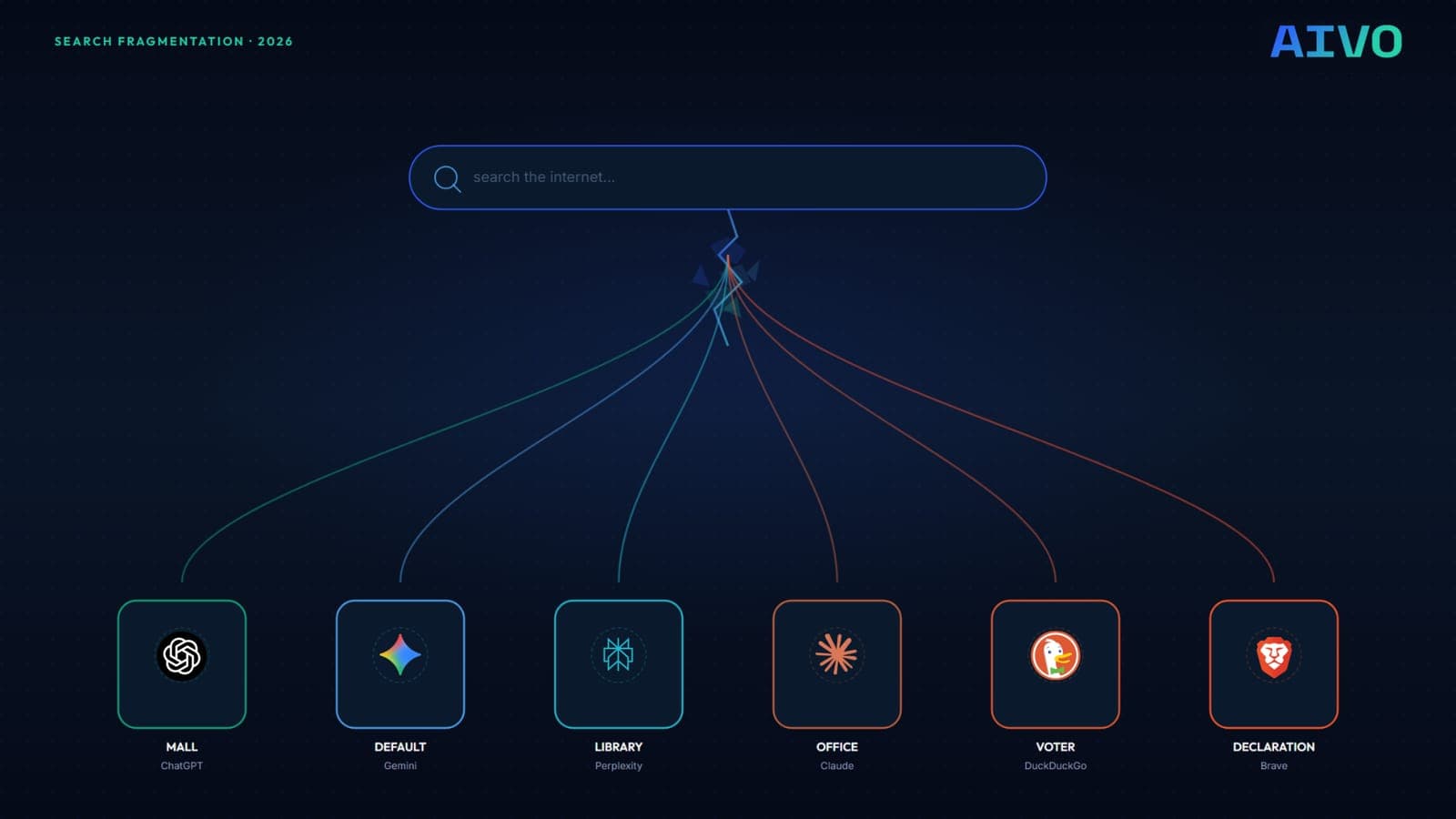
Google still holds 90% market share. But searchers are self-selecting into ecosystems based on identity, intent, and values. Each platform has a distinct demographic fingerprint — and brands optimizing only for Google are optimizing for a version of the internet that no longer exists.
From Google to Everything Else: How Search Behavior Is Fragmenting and What That Means for Your Brand
The Core Thesis
Google built the internet on one premise: everyone searches the same way. That is over. Searchers are self-selecting into ecosystems based on identity, intent, and values. Each ecosystem has a distinct demographic fingerprint. Brands that don't understand where their audience actually searches are optimizing for a version of the internet that no longer exists.
The Google Era Is Fading (But Not Gone)
Google holds nearly 90% of global search market share. But market share is a lagging indicator. It tells you where people went last year, not where they're going next.
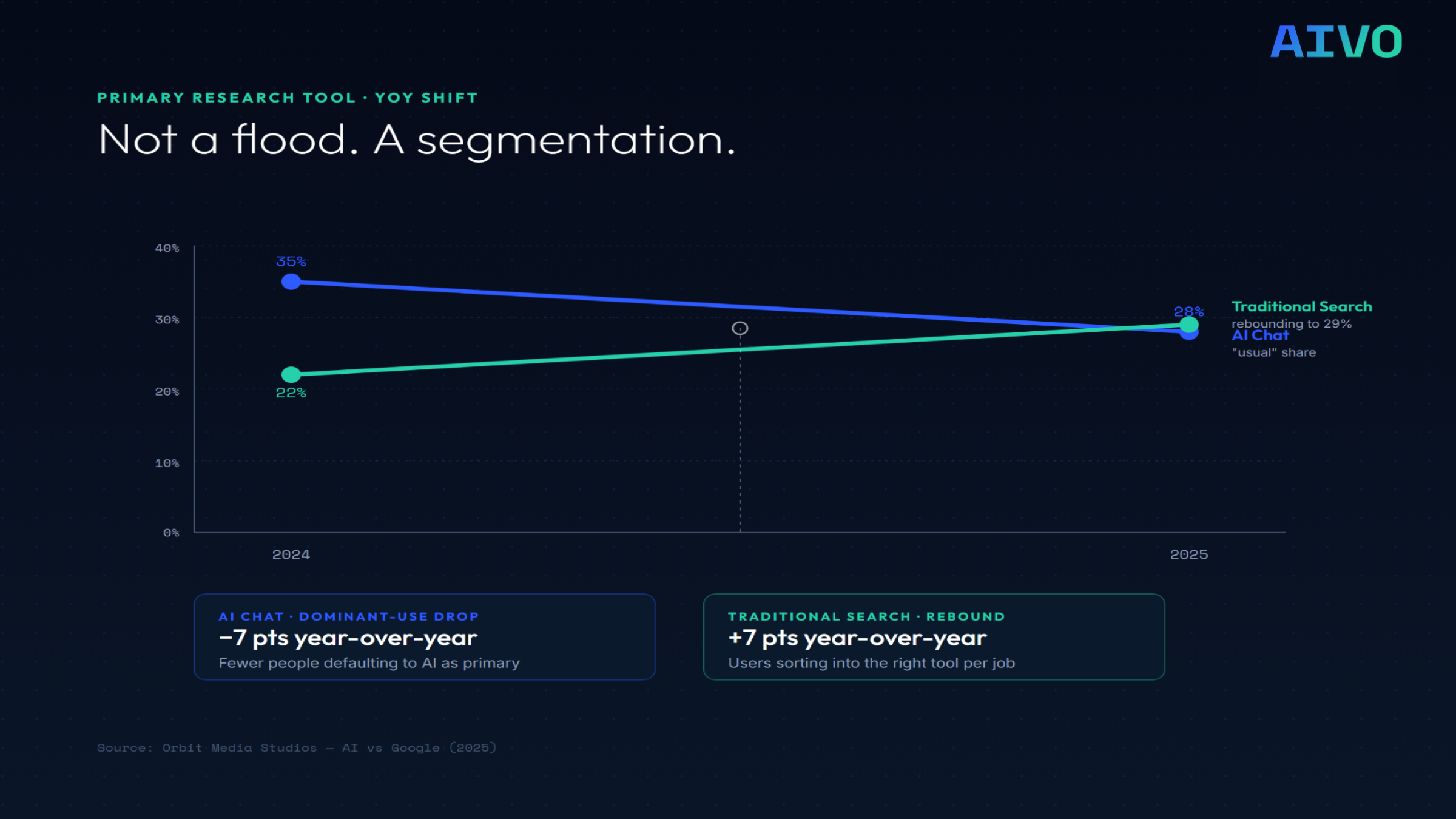
55% of respondents now use AI chat as their primary or frequent research tool. That number grew year-over-year even as the mix shifted: casual AI users moved back toward search, while committed AI users deepened their habits. Traditional search rebounded. The migration isn't a flood. It's a segmentation. Different people are locking into different tools for different jobs.
Source: Orbit Media Studios
The New Ecosystem (Platform by Platform)
ChatGPT — The Mall
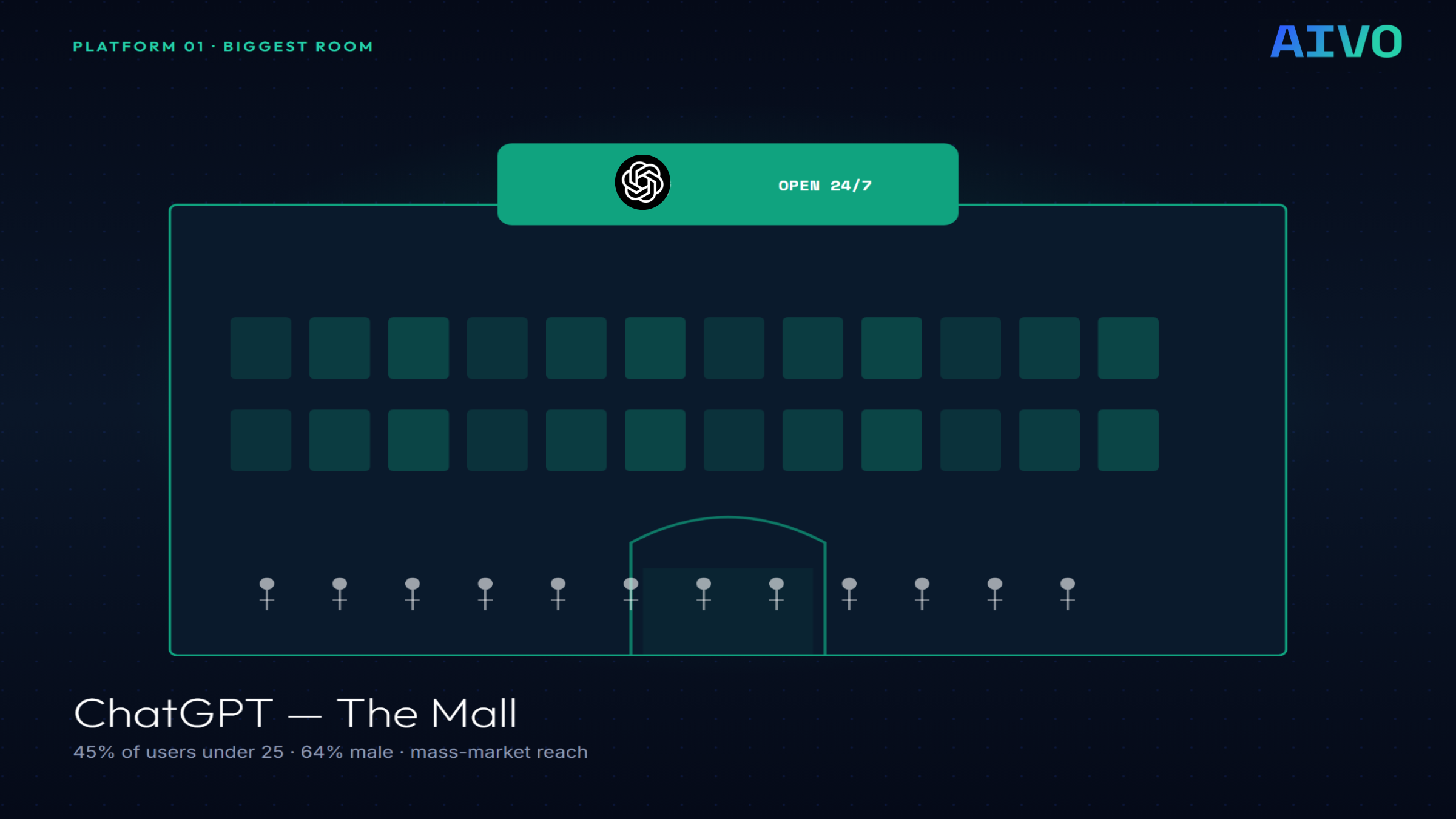
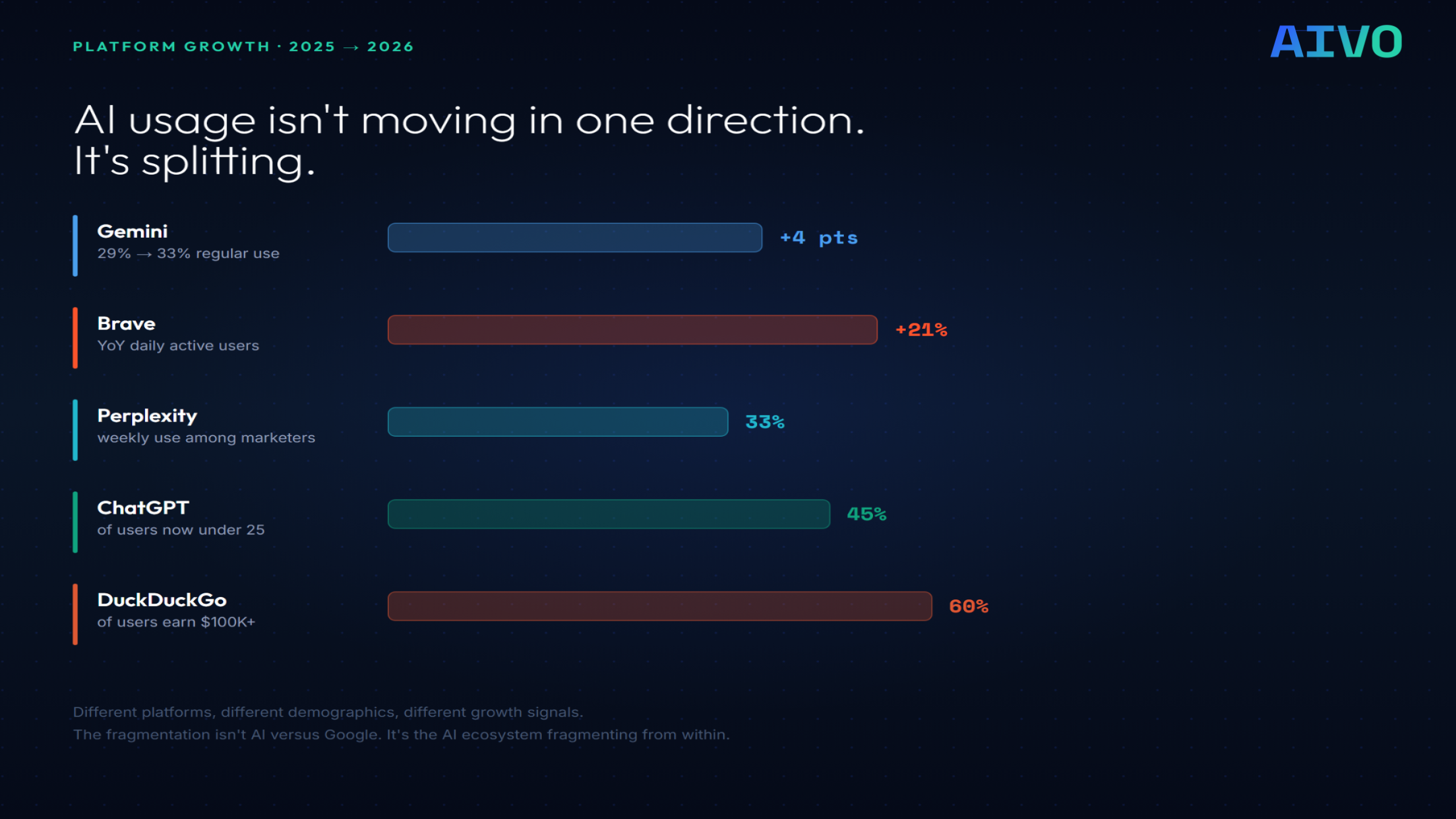
The biggest room. Not the most sophisticated crowd. Nearly half of ChatGPT's user base is under 25, with the 25-34 age group forming the single largest segment at roughly 30%. The platform's gender split has largely equalized since early 2024 — sitting at around 54% male as of 2025, down from 64% at the start of that year. Top interest categories include video games and streaming content. This is mass-market reach. High volume, broad intent. The brand-awareness play.
Sources: Exposure Ninja, NBER / SociallyIn
Gemini — The Default Tenant
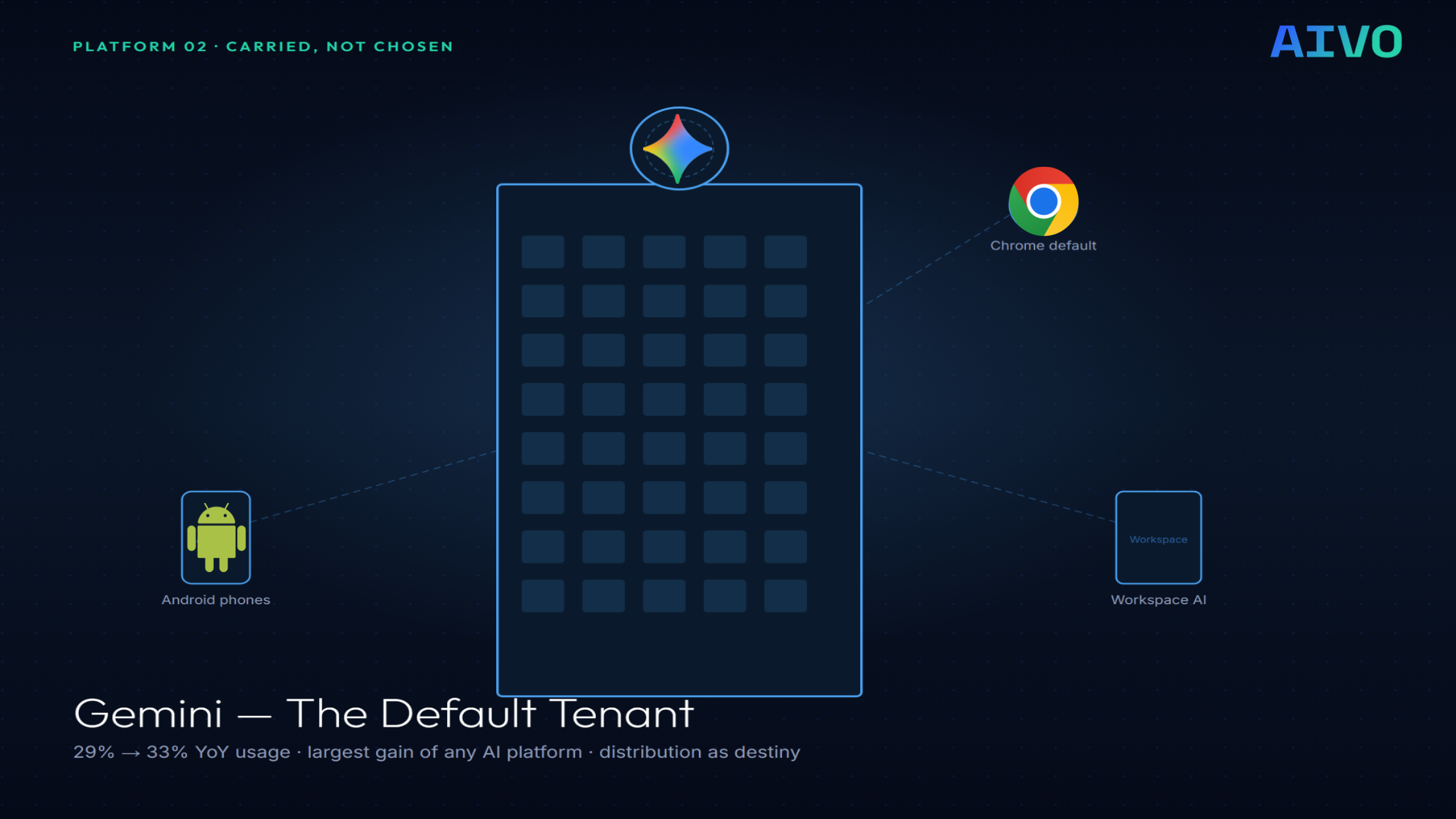
Gemini grew from 29% to 33% regular usage year-over-year, the largest gain of any platform. Most of that isn't choice. Google owns Android, Chrome, and Workspace. Every US phone pushes users to Google Search when they need something. Gemini users aren't migrating. They are being carried.
Source: Orbit Media Studios
Perplexity — The Research Library
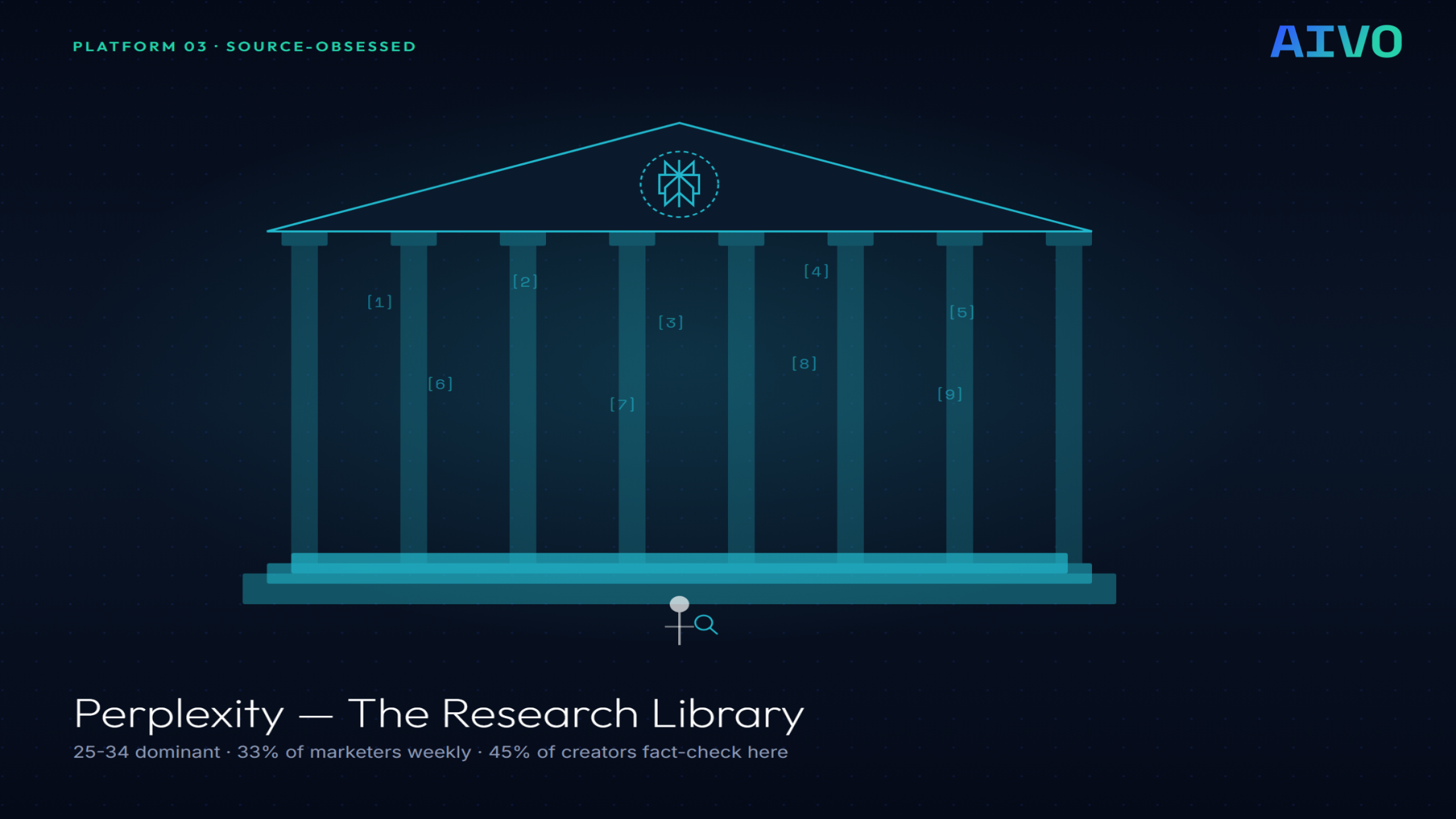
25–34 age group, 60% male, citation-obsessed. 33% of marketers use it at least three times a week. These users don't trust answers. They trust sourced answers. High-quality audience, citation-driven visibility.
Sources: Exposure Ninja, SeoProfy
Claude — The Enterprise Office
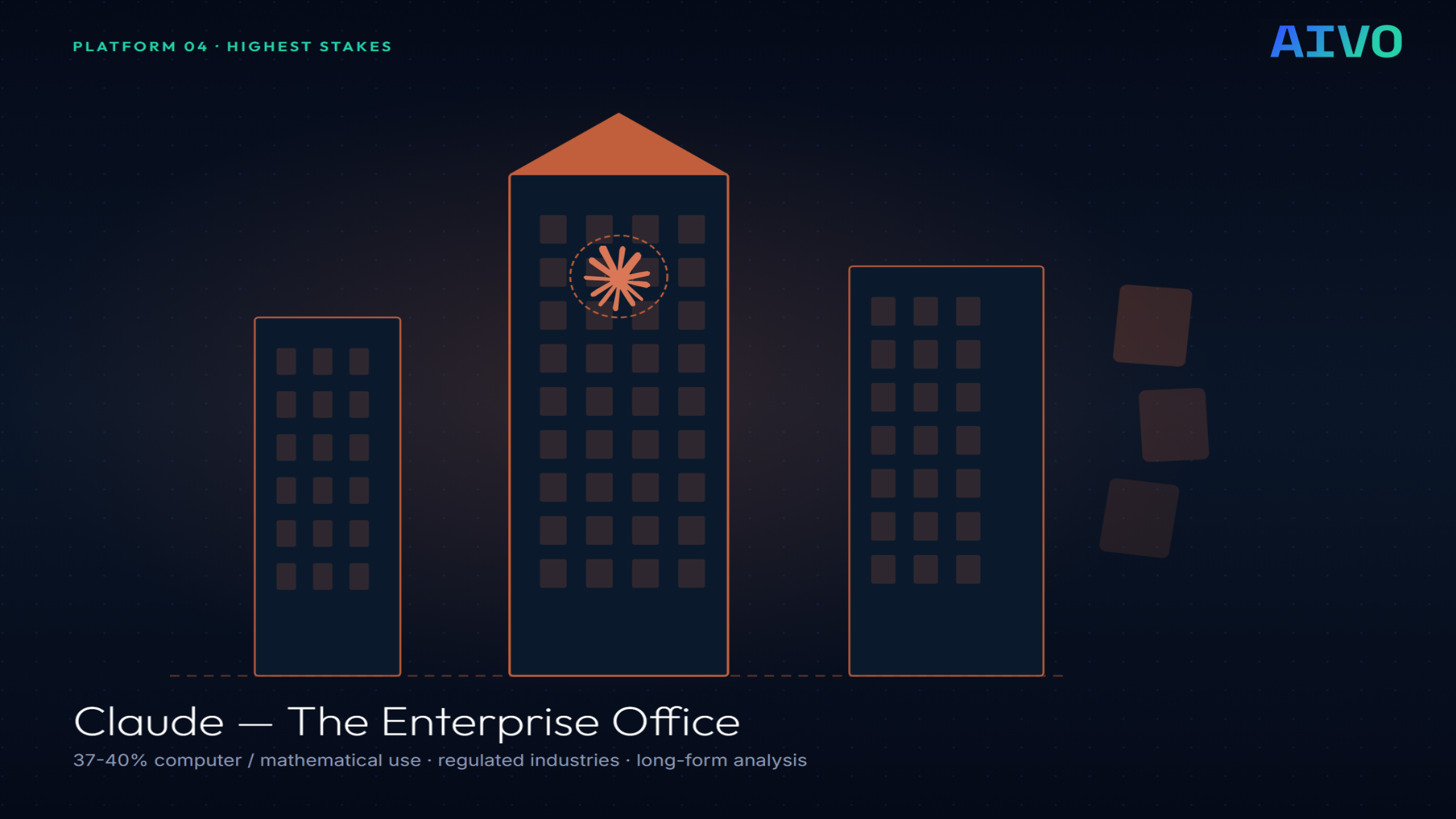
Computer and mathematical use cases dominate, representing 35% of Claude.ai conversations and 44% of API traffic per Anthropic's own data. Favored in regulated industries for long-form document analysis. Lower volume. Highest stakes per conversation.
Source: Anthropic Economic Index, January 2026
DuckDuckGo — The Privacy Voter
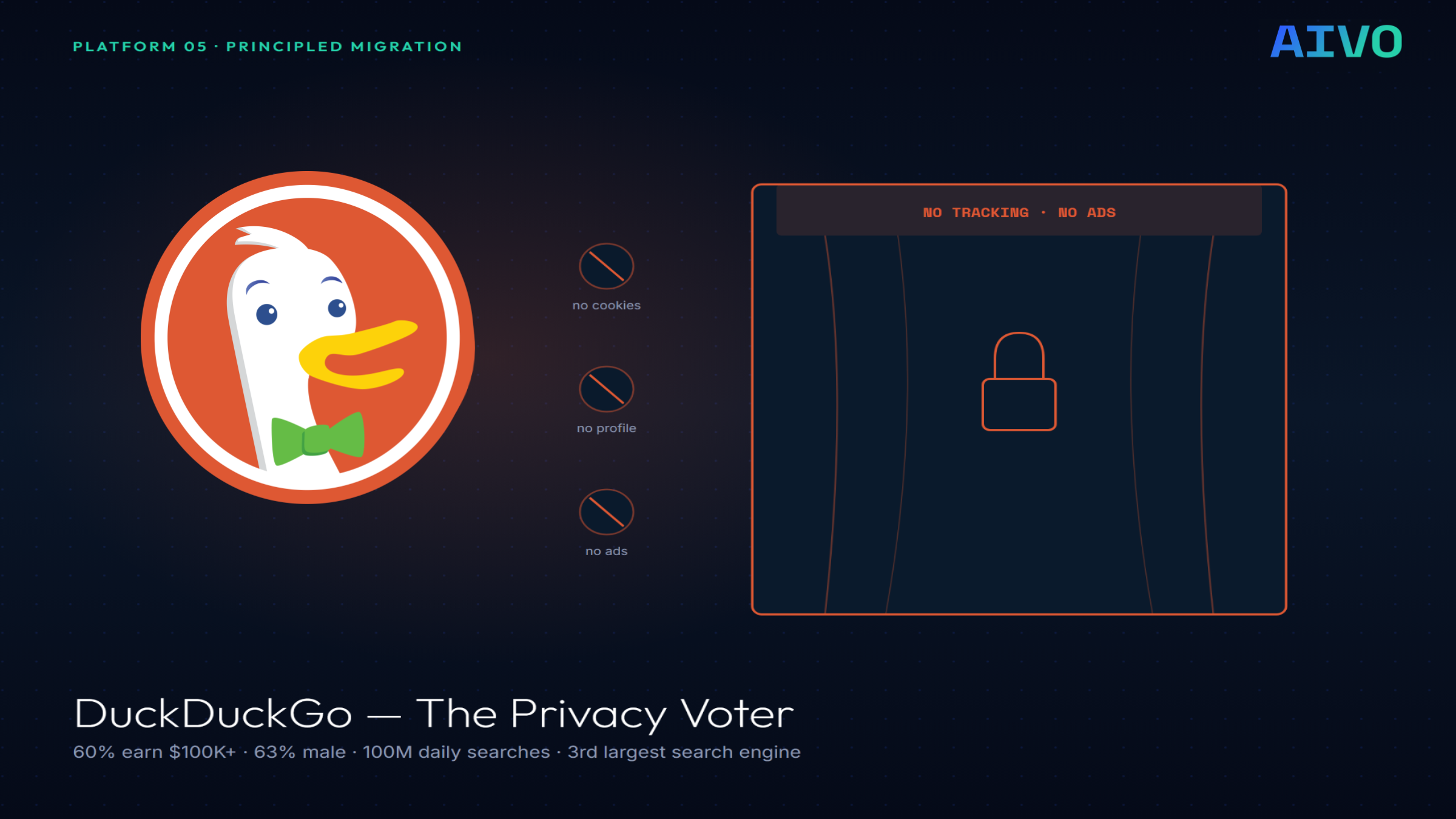
63% male, 25–34 largest demographic, 60% of users earn over $100,000 per year. 100 million daily searches. Growth driven by privacy concerns, not product features. This user knows what tracking means and actively refuses it. Educated, affluent, principled. DuckDuckGo is now the third most-used mobile search engine in the US — ranking fifth globally by overall market share.
Sources: Loopex Digital, TwinStrata
Brave — The Ideological Alternative
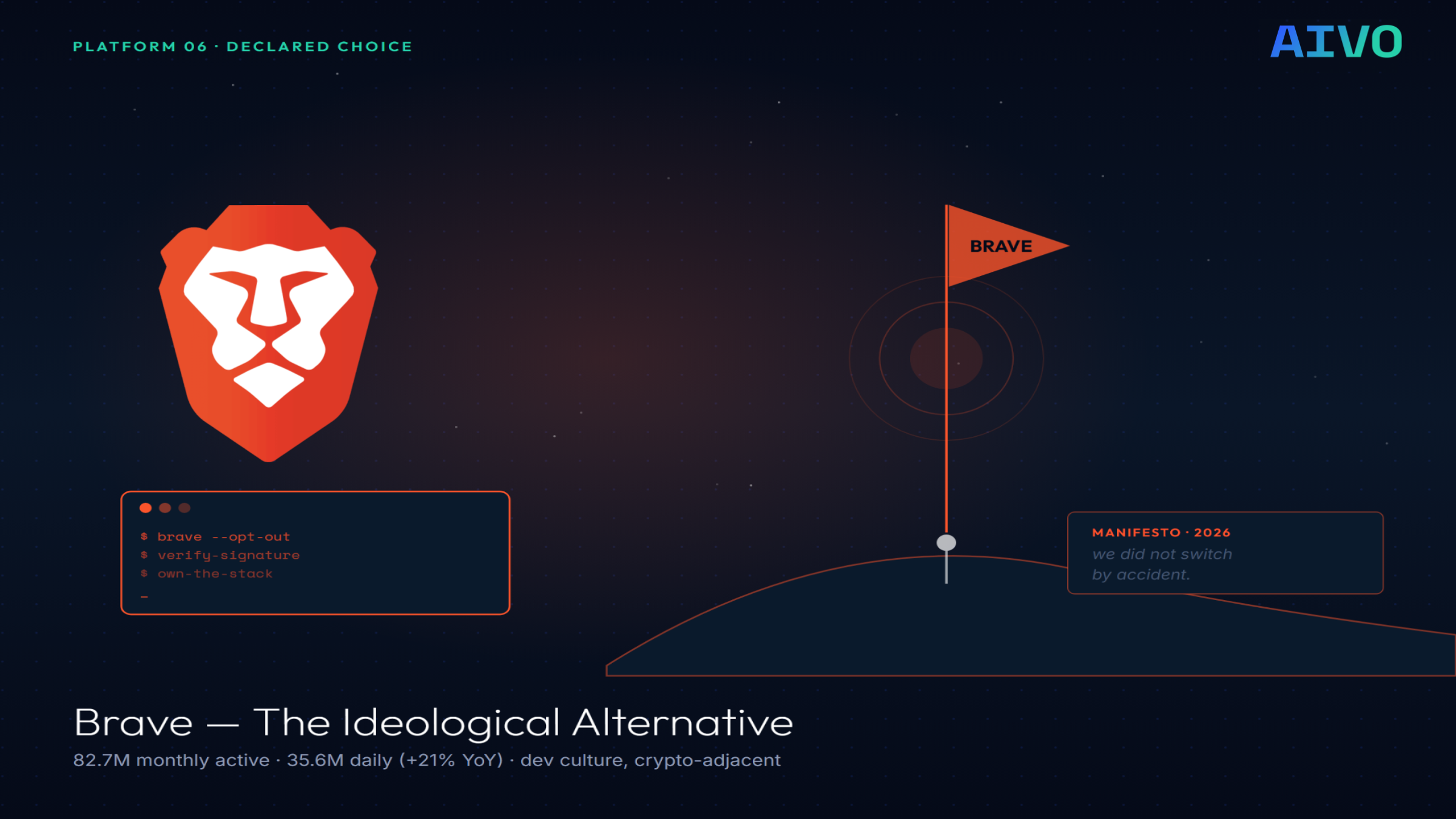
82.7 million monthly active users. 35.6 million daily active users, up 21% year-over-year. Brave's user is the overlap of tech-native and privacy-first. Developer culture. Crypto-adjacent. This isn't someone who switched from Google by accident. This is someone who made a declaration.
Source: TapTwice Digital
What the Demographic Shift Actually Means for Brands
Every platform has different citation logic, different trust signals, different content formats that win. The demographic difference between a ChatGPT user under 25 and a DuckDuckGo user earning $100K+ isn't just a marketing stat. It's a completely different content strategy, authority signal, and optimization approach.
There's only 25% overlap between ChatGPT and Perplexity recommendations. That means you could be winning on one and invisible on the other, with the same brand. If your buyer is the Perplexity or DuckDuckGo type, being cited only in ChatGPT is like being in the wrong building.
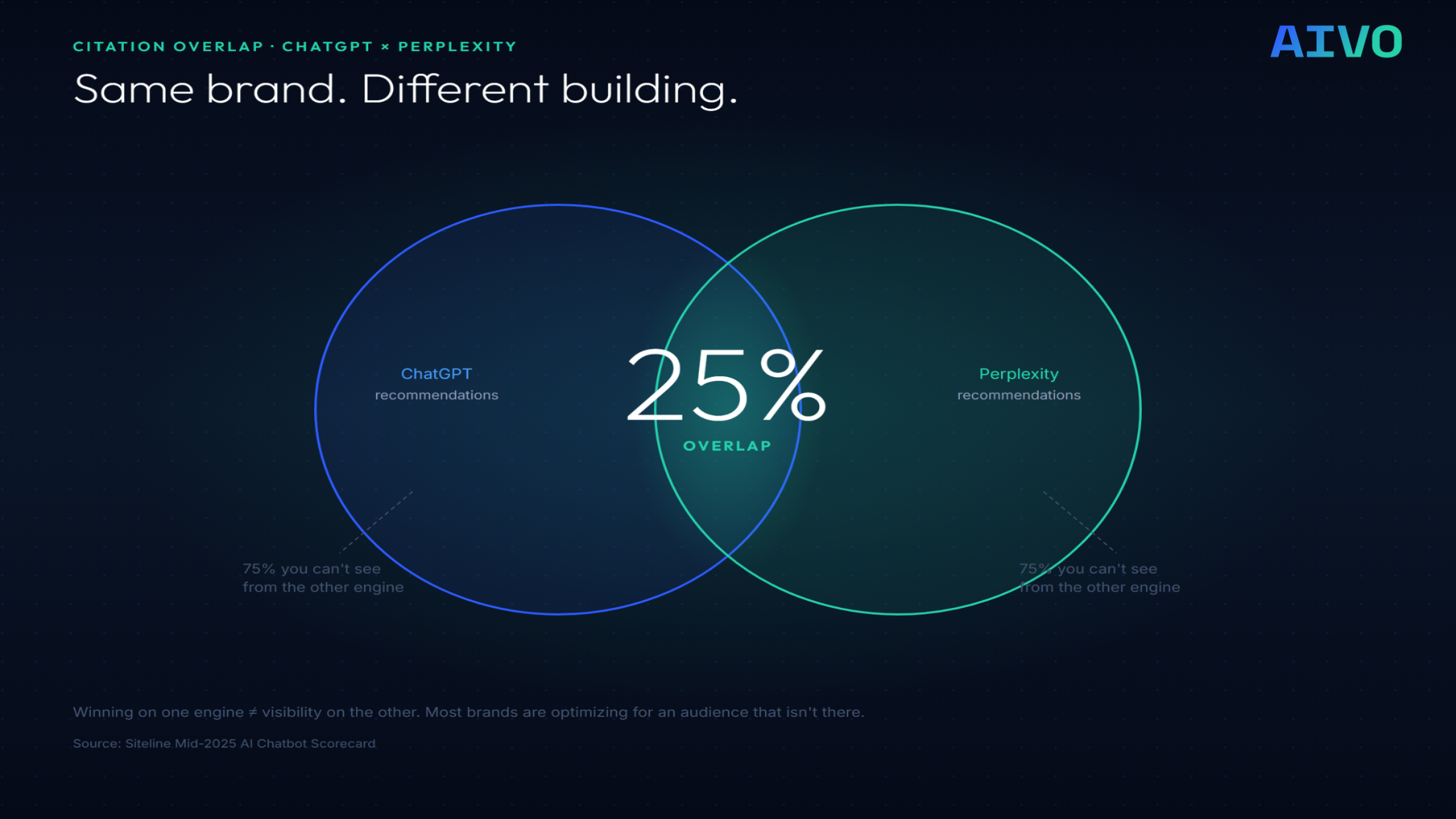
Source: Siteline
The question used to be: "What does my brand look like on Google?"
The question now is: "What does my brand look like to a 28-year-old researcher on Perplexity? To a $120K earner searching Brave? To a CMO asking Claude to evaluate vendors?"
Four different answers. Most brands have zero visibility into any of them.
That's what AIVO measures. For the full map of how engines, crawl access, sources, structure, recommendation, and measurement connect, see the AI search ecosystem.
Sebastian Pinzon is co-founder of AIVO, an AI visibility intelligence platform. He spent 15+ years in advertising at Publicis, WPP, and Omnicom before building AIVO. He writes about AI search, brand visibility, and what it takes to build in the open.
Follow him on LinkedIn


