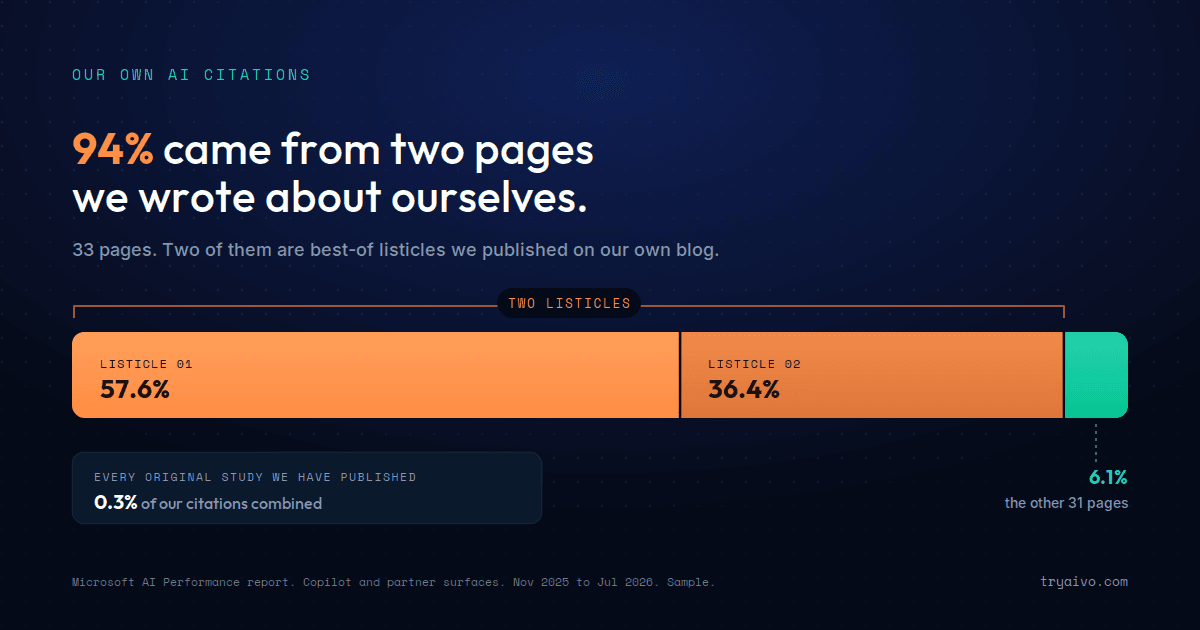
How to Advertise in AI in 2026: Google, ChatGPT, Amazon & Walmart
A plain guide to where AI advertising stands. Across Google, ChatGPT, Amazon, and Walmart, you cannot target the AI placement directly—it is opt-in inventory.

How to Advertise in AI in 2026: What Google, ChatGPT, Amazon, and Walmart Actually Let You Buy
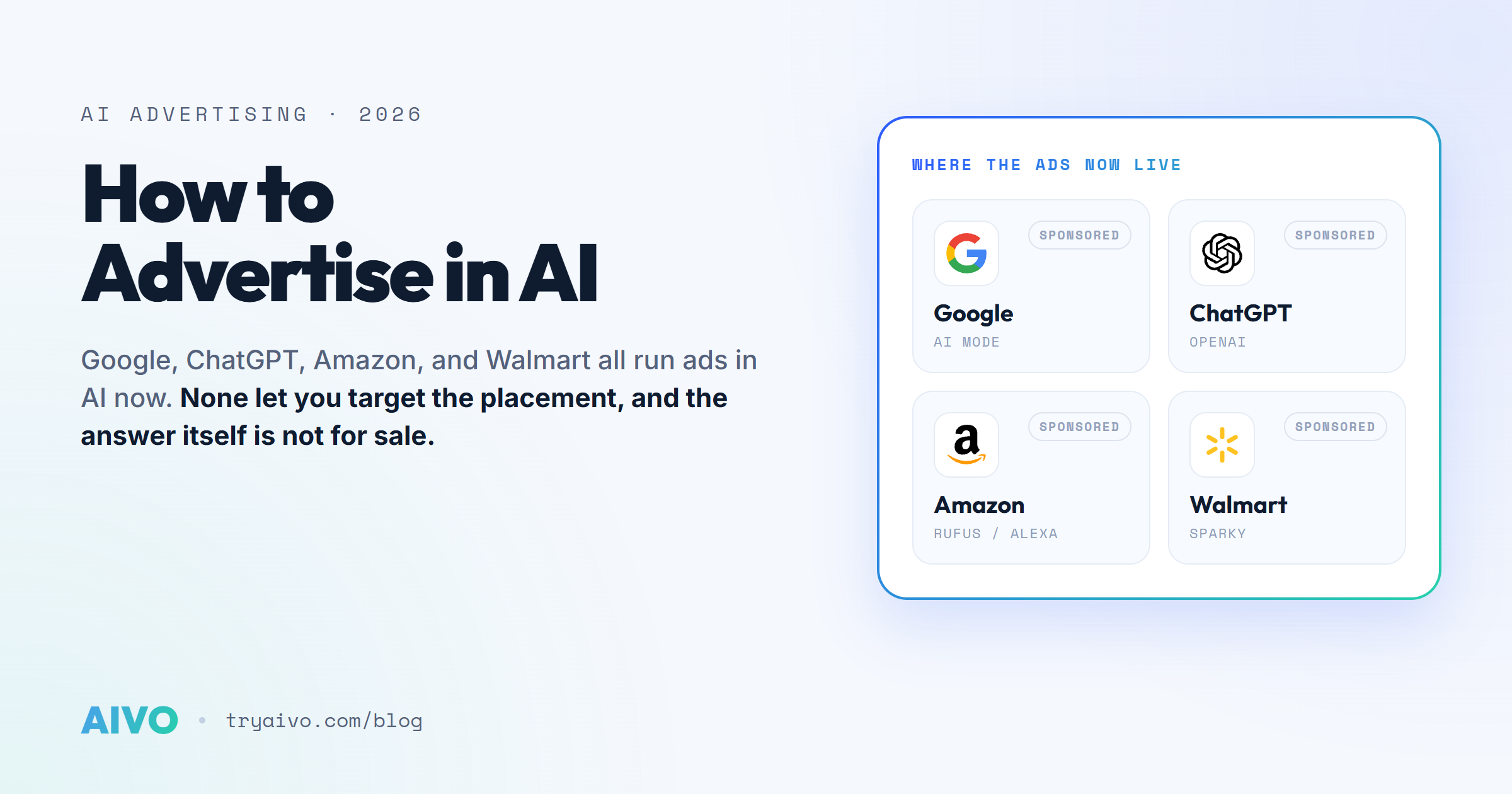
A plain guide to where AI advertising actually stands. Across the four biggest platforms, you cannot target the AI placement directly. It is opt-in inventory, and the answer itself is not for sale.
Every few weeks a headline says you can now advertise inside AI. Google puts ads in AI Mode. OpenAI sells ads in ChatGPT. Amazon and Walmart drop sponsored products into their shopping assistants. For a marketer, the next question is obvious: how do I buy one of those?
The honest answer, in mid-2026, is that you mostly cannot buy them the way you would expect. Across the four biggest platforms shipping AI ads, almost none let you target the AI placement directly. You do not build an "AI campaign." You run the ads you already run, and the platform decides whether to show them on its AI surface. It is opt-in inventory that the platform places for you, with no guarantee you appear.
Here is what each platform actually offers right now, what the ads look like, and what it means for how you plan.
📋 TL;DR
- AI ads on Google, ChatGPT, Amazon, and Walmart are mostly opt-in inventory from existing campaigns—not a placement you can target or guarantee.
- Google serves Search, Shopping, and Performance Max into AI Mode; AI Max expands reach but still does not let you pick the AI slot.
- ChatGPT ads sit as a labeled card below the answer; OpenAI's answer independence means you cannot pay to be the recommendation.
- Amazon Rufus (Alexa for Shopping) and Walmart Sparky extend retail media into assistant replies the same way.
- Paid rents a slot beside the answer; AI visibility—being named inside the answer—is earned and measured per engine.
First, two different things people call "AI advertising"
When marketers say AI advertising, they usually mean one of two things. The first is using AI to make ads: generating copy, images, and video, or letting a platform auto-build and optimize campaigns. The second is ads that appear inside AI products: the sponsored results that show up when someone asks an AI assistant a question.
This piece is about the second one. The first is a creative and tooling story. The second is a media-buying story, and it is the one quietly changing where your budget lands.
Ads in Google AI Mode
Google was first at scale. Ads now appear inside AI Mode, Google's full conversational search. They carry the standard "Sponsored" label and sit right in the flow of the AI answer. AI Overviews, the shorter summary on a normal search, is where this has been tested least; the live, visible placement today is AI Mode.
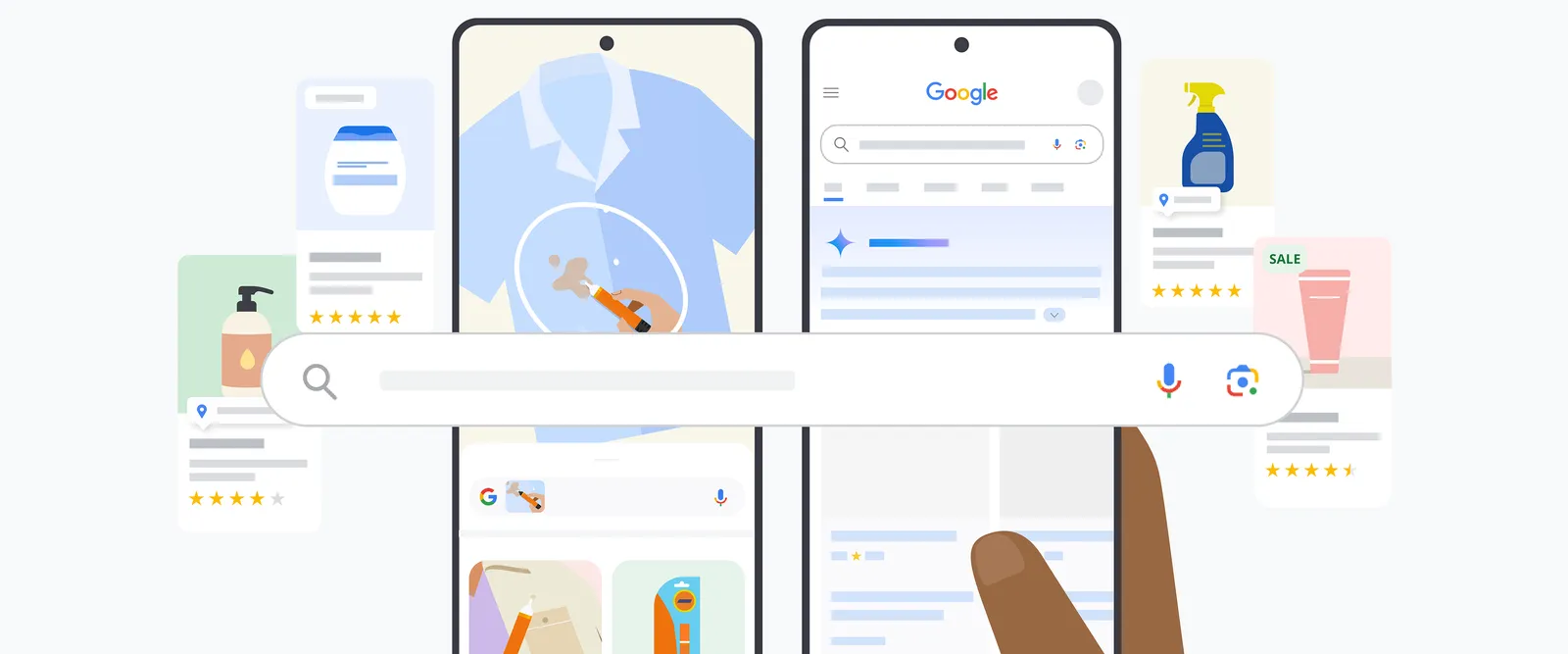
Credit: Google
The part that surprises marketers: there is no separate "AI Mode campaign." Google serves these from your existing Search, Shopping, and Performance Max campaigns. Eligible ads are automatically considered for AI surfaces, run through the same auction, and bill at the same cost per click. You do not opt in, and you cannot guarantee you appear.
The closest thing to an AI control is AI Max, a toggle on your Search campaign. Switch it on and Google's AI expands your keywords, rewrites your creative, and widens where you show, which is now the main way your ads reach AI Mode and other AI-powered search surfaces. You are turning on more automation, not selecting a placement. You still cannot pick the AI slot or guarantee you land in it.
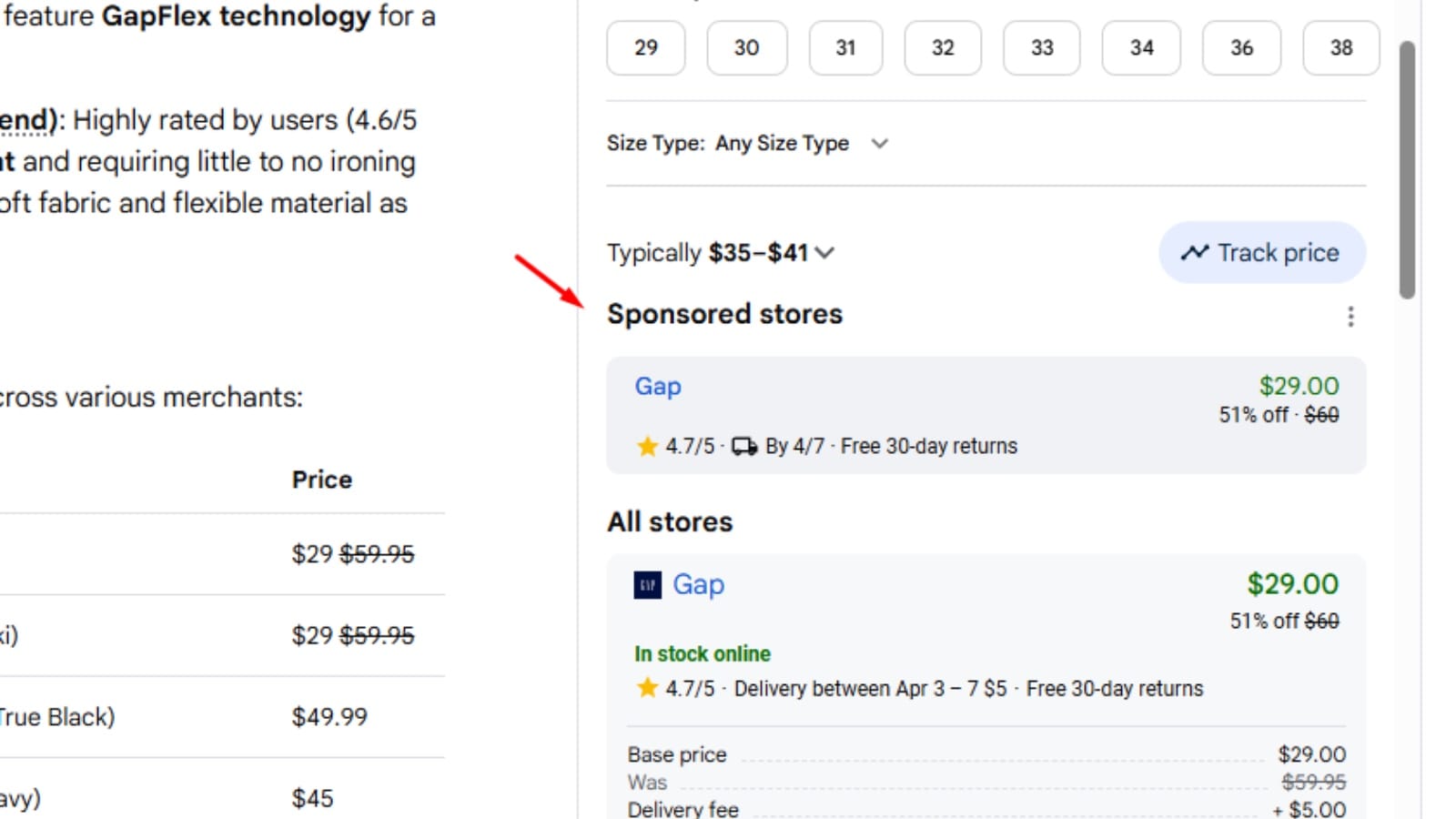
In AI Mode, that looks like a "Sponsored stores" unit sitting above the organic "All stores" list: one advertiser's product placed at the top of the answer.
How to advertise on ChatGPT
OpenAI began testing ads in ChatGPT in the US in early 2026, shown to free and lower-tier users. The ads are contextual, based on the topic of the chat, general location, and language, and they appear as a labeled card below the response, separate from the answer.
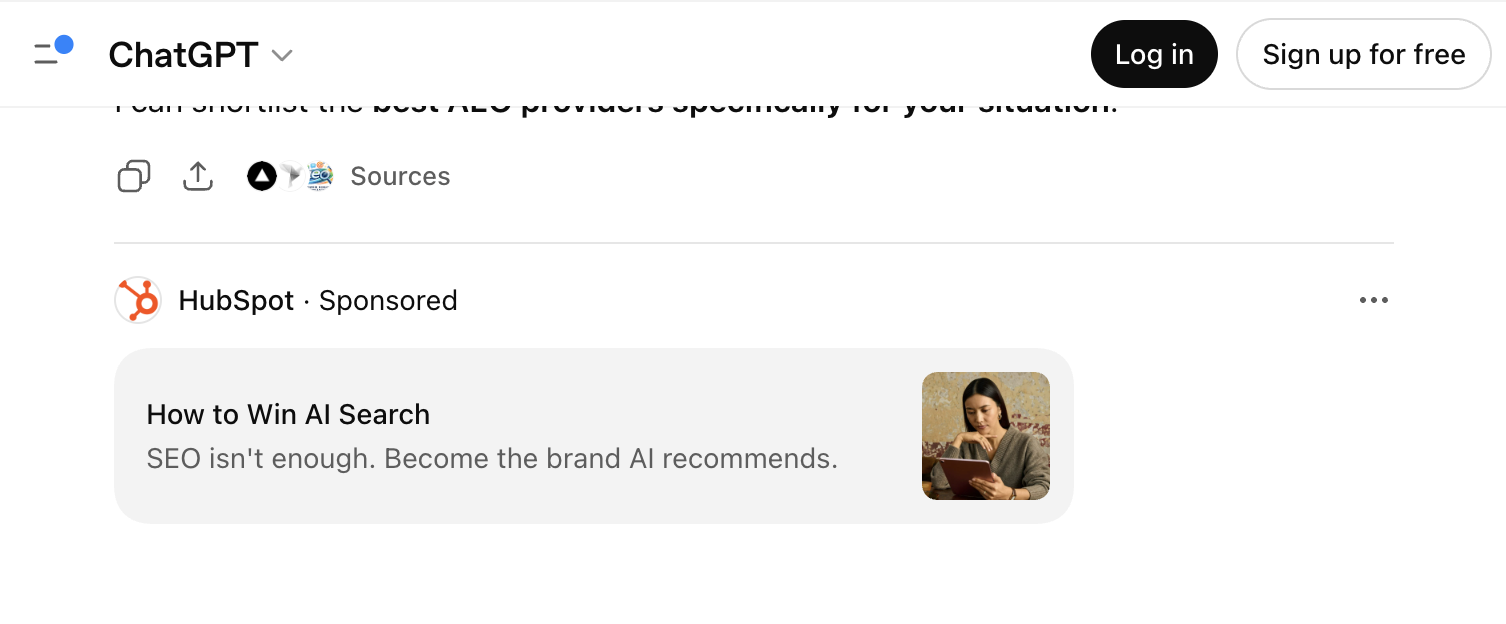
Example of a sponsored card in ChatGPT (format demo; not necessarily a confirmed live buy).
This is where the point is clearest. OpenAI states a principle it calls answer independence: "Ads do not influence the answers ChatGPT gives you." Sam Altman put it plainly: "We are not stupid and we know our users would reject that." So even the platform that built a brand-new ad product keeps the ad away from the recommendation. You can pay to sit under the answer. You cannot pay to be the answer, which is exactly why being recommended beats being cited.
Advertising on ChatGPT is more accessible than it was at launch. OpenAI has opened a beta self-serve Ads Manager in the US, with CPC bidding and its own reporting, plus buying through partners like Criteo and Kargo, and it dropped the minimum spend. So you can now set a budget and run these yourself. What has not changed is the wall between the ad and the answer, and that is a stated design choice, not a temporary limit.
Ads inside Amazon's Rufus (now Alexa for Shopping)
Amazon put ads inside its AI shopping assistant, Rufus, renamed Alexa for Shopping in May 2026. The format is called Sponsored Products Prompts: when a shopper asks the assistant a question, your product can appear as a sponsored recommendation inside the reply.
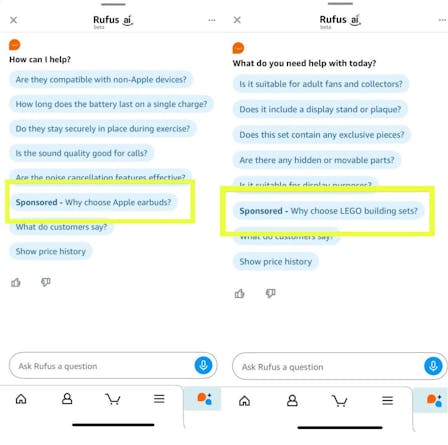
The mechanic mirrors Google. Amazon auto-enrolls eligible Sponsored Products and Sponsored Brands campaigns, writes the prompt copy from your existing product data, and bills each click at your standard CPC. It launched as a free beta in November 2025 and moved to paid general availability in the US on March 25, 2026. Again: no new campaign type, and no way to target the placement on its own.
Walmart's Sparky is next
Walmart is rolling the same idea into Sparky, its AI shopping assistant. Sponsored Prompt Ads are in testing, appearing as sponsored recommendations inside Sparky's answers, and Walmart is adding an AI assistant called Marty to help brands build the campaigns that feed them.
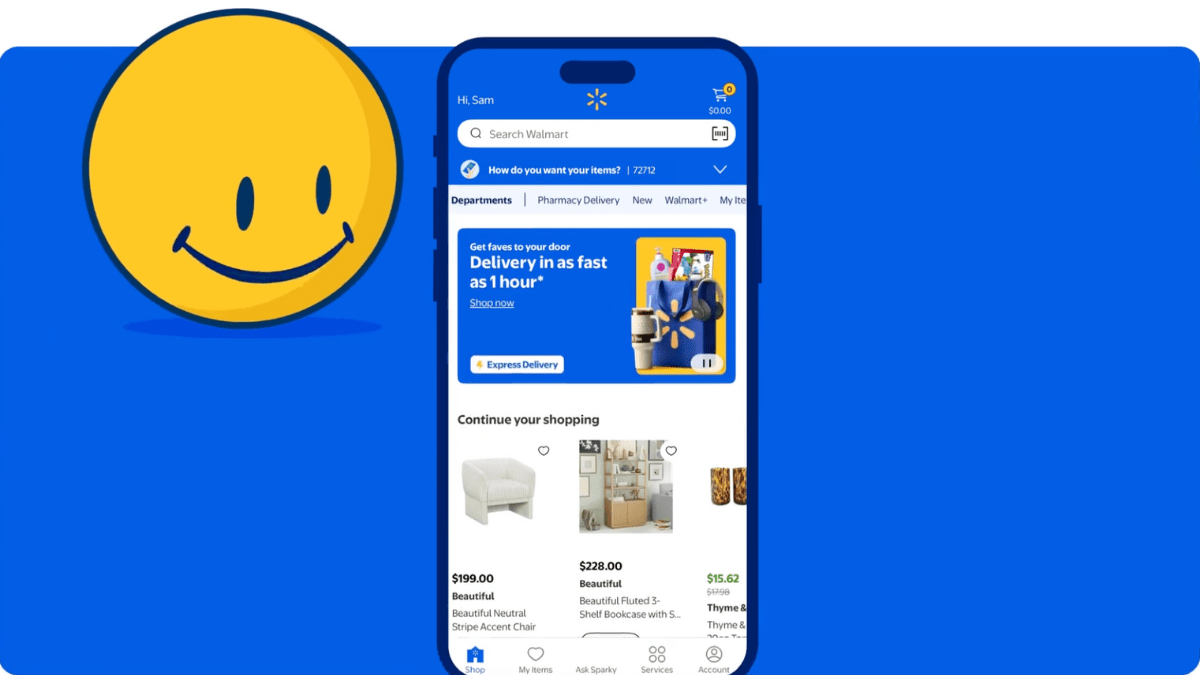
Credit: Walmart via Adweek
The pattern holds: existing retail-media budgets extended onto a new AI surface.
The pattern: opt-in inventory, not a placement you can target
Four of the largest ad businesses in the world shipped AI ads within about six months of each other, and they landed on nearly the same model:
- No dedicated "AI ads" campaign to build.
- Your existing campaigns are auto-enrolled or auto-eligible.
- The same auction and the same cost per click.
- The platform decides whether you appear in any given answer.
What paid still cannot buy
There is a line every one of these platforms draws, some by design and some by how the auction works: the ad sits next to the answer, but the answer itself is not for sale. Google labels the sponsored unit and keeps the AI summary separate. OpenAI states outright that ads do not shape responses. When an assistant writes "here are the best options for your situation" and names a few brands, those names are chosen by the model, not by a bid, and the model does not recommend who you think.
That is the gap worth planning around. Paid can rent you a slot beside the answer. It does not make you the brand the model recommends, which is why AI representation is now a CMO problem, not only an SEO one.
These are lower-funnel placements, not brand building
Two things are worth saying plainly before anyone moves budget. First, these placements only earn their spot when they are relevant to what the person just asked. A sponsored product that fits the question is useful. One that does not degrades the experience the assistant is there to provide, which is why the platforms label and cap them carefully.
Second, and more important for planning: none of this builds a brand. The ad appears because someone described a need and the platform matched a product to it. That is demand capture, not demand creation. It answers intent that already exists, and it does not make a person want you, remember you, or feel anything about you the way a video or a social campaign can.
So AI ads are nowhere near replacing Instagram, YouTube, or any video channel. Right now they are a lower-funnel, direct-response tactic, and one that is not even guaranteed to show. Expect the first wave of advertisers to be direct-response buyers, because a labeled product answer to a specific query is what direct response already does. Brand budgets have no obvious home here yet.
What marketers should do now
Keep running the ads. If you already spend on Google Search and Shopping, Amazon Sponsored Products, or Walmart Connect, you are likely appearing on AI surfaces already, and that inventory is worth the impressions. Just do not mistake it for AI visibility.
The harder and more durable work is the earned side: understanding how AI assistants describe and recommend you when a buyer asks, and improving it. That is the part no auction sells, it has to be measured per engine against the truth, and it is where the next advantage is being built.
Book a meeting and we will show you how AI describes and recommends your brand today.
FAQ
Q: Can you buy ads inside AI answers? A: You can buy ads that appear next to or below AI answers on Google, ChatGPT, Amazon, and Walmart, but you cannot target the AI placement on its own. The platforms serve them from your existing campaigns and decide when to show them, so there is no guarantee you appear in any given answer.
Q: How do you advertise on ChatGPT? A: OpenAI began testing ads in ChatGPT for free and lower-tier US users in early 2026. Ads are contextual and appear as a labeled card below the answer. OpenAI has opened a beta self-serve Ads Manager in the US with CPC bidding, alongside buying through partners, and it states that ads do not influence the answers ChatGPT gives.
Q: How do ads work in Google AI Overviews and AI Mode? A: Google serves Search and Shopping ads into AI Overviews and AI Mode from your existing Search, Shopping, and Performance Max campaigns. They are labeled Sponsored, run in the same auction, and bill at the same cost per click. You cannot buy the placement directly or guarantee that you appear. AI Max, a setting on your Search campaign, is the main way to opt into these AI surfaces, though it still does not let you target the placement.
Q: Do ads change what AI recommends? A: On the platforms that have stated a policy, no. OpenAI calls it answer independence: ads do not influence the answer. The sponsored unit sits beside the answer, while the brands named inside the answer are chosen by the model.
Q: What is the difference between paid AI placement and AI visibility? A: Paid puts a labeled ad near the answer. AI visibility is being the brand the model names inside the answer when a buyer describes a need. Paid cannot buy that; it is earned through how AI reads, describes, and recommends you across engines.
Key Takeaways
- Across Google, ChatGPT, Amazon, and Walmart, AI ads are opt-in inventory from existing campaigns—not a dedicated placement you can buy or guarantee.
- The ad sits next to the answer; the recommendation inside the answer is not for sale.
- These are lower-funnel, demand-capture placements, not brand-building channels.
- Keep running eligible campaigns, but do not mistake AI ad inventory for AI visibility.
- The durable work is measuring how engines describe and recommend you per engine—and improving that earned presence.
Sources: Google (ads in AI Overviews); OpenAI (ads in ChatGPT, answer independence); Amazon (Sponsored Products Prompts, GA March 25 2026); Walmart (Sparky ads, Adweek); Search Engine Land; PPC Land AI Mode.
Related Articles
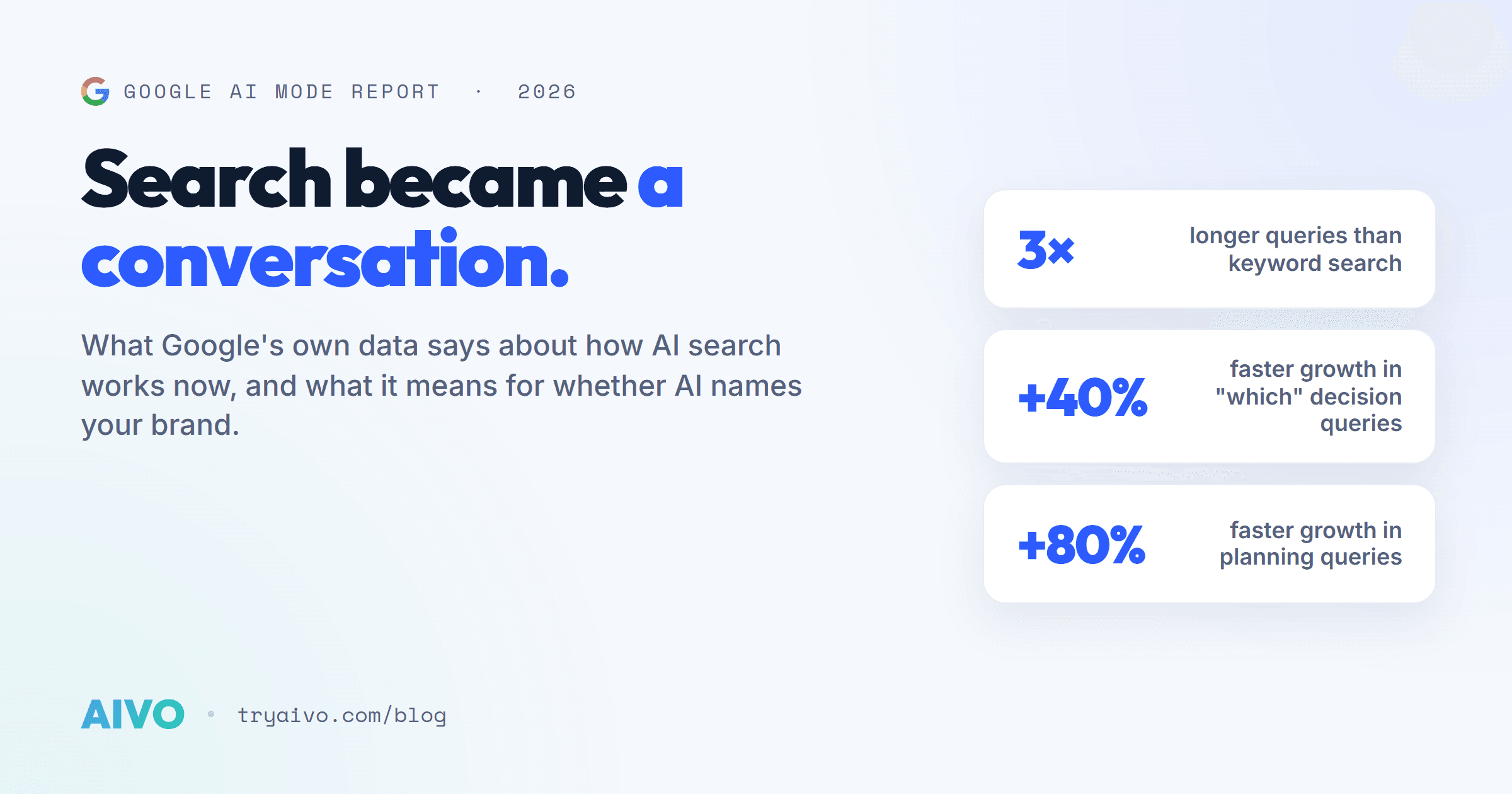
Google AI Mode: What the Data Means for Brands (10 Takeaways)

How AI Recommends Beauty Brands: We Measured 1,500 Answers Across 5 Engines