How Wikipedia Errors Become AI Facts in 2026
Wikipedia errors propagate into ChatGPT, Claude, and Perplexity answers about your brand. Here's the mechanical pathway and what to do about it in 2026.
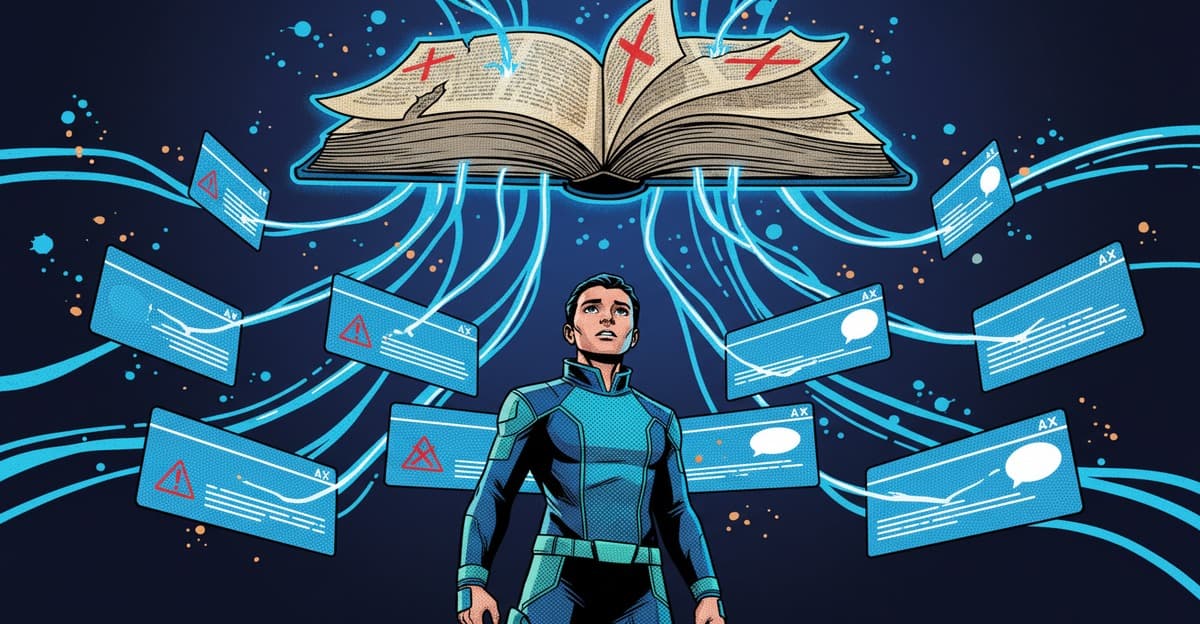
How Wikipedia Errors Become AI Facts in 2026
AI engines like ChatGPT, Claude, and Gemini treat Wikipedia as a high-trust source in their training data and retrieval pipelines. When your Wikipedia page contains errors, outdated information, or negative framing, those claims get amplified across every AI-generated answer about your brand. Most companies don't monitor this pathway. By the time they notice, the damage has compounded across millions of AI interactions.
This isn't a fringe risk. It's the default state for most brands right now.
Want to see what AI engines are actually saying about your brand? Run a free AIVO visibility snapshot and find out in minutes.
Key takeaways
- Wikipedia is one of the most-weighted sources in AI training data. It accounts for a disproportionate share of factual grounding across every major AI engine.
- AI engines don't fact-check Wikipedia claims against your site. They inherit whatever the page says and present it with the model's authority.
- Negative framing on Wikipedia propagates into AI answers. A single "controversy" section can dominate how AI engines characterize your brand for months.
- Brands without a Wikipedia page face a different risk. AI engines fill the gap with whatever scattered sources they can find. That's often worse than a flawed Wikipedia page.
Why Wikipedia carries so much weight in AI engines
AI models are trained on massive text corpora. Wikipedia is one of the largest, most structured, and most frequently updated sources in those datasets. OpenAI has acknowledged that Wikipedia is a significant component of GPT-4's training data. Google's Gemini uses it as a retrieval source. Anthropic's Claude treats it as high-authority text.
The reason is structural. Wikipedia is cited, hyperlinked, and covers nearly every notable entity. For AI models answering questions about specific brands, people, or products, Wikipedia often provides the most comprehensive summary available.
This creates a leverage problem. Whatever Wikipedia says about your brand carries outsized influence in AI answers, far more than your own website in many cases. A Search Engine Land investigation documented exactly this pattern: Wikipedia content flows directly into AI engine outputs with minimal filtering.
Research by ALLMO found that entities with Wikipedia pages are 50% more likely to appear in AI-generated top-ten lists than those without. That single data point explains why this matters so much.
How negative information spreads from Wikipedia into AI answers
The pathway is mechanical, not conspiratorial:
- A Wikipedia editor adds or modifies content on your brand's page: a "Criticism" section, a legal dispute mention, or outdated revenue figures
- The AI model ingests this during training or retrieves it during real-time search augmentation
- When a user asks about your brand, the model weighs Wikipedia's structured content heavily in its response
- The AI answer includes the negative claim, often without the context or nuance that existed in the original Wikipedia edit history
A single outdated paragraph on Wikipedia can define how millions of AI-generated answers characterize your brand.
Unlike a bad Google result that you can push down with SEO, an AI engine's understanding of your brand lives inside the model's weights and retrieval index. You can't outrank it. You have to fix the source.
Not sure if your Wikipedia page is affecting your AI answers? AIVO's accuracy audit compares what AI engines say against what's actually true about your brand.
What if your brand doesn't have a Wikipedia page?
This is a more common situation than people admit. Most startups, scale-ups, and even mid-size companies don't meet Wikipedia's notability bar. That's not a failure. It's just where most brands are.
The risk is different but real. Without a Wikipedia page, AI engines have no authoritative structured source to reference. They piece together what you are from scattered web mentions, press releases, LinkedIn bios, and Crunchbase entries. The result is often vague, inconsistent, or just wrong.
Here's what to do about it.
Understand what Wikipedia actually requires
Wikipedia's notability bar is specific: a brand qualifies when it has received significant coverage in multiple independent, reliable secondary sources. Not press releases. Not sponsored content. Not Crunchbase listings.
Significant means feature articles, in-depth profiles, or detailed analysis where your company is the primary subject. Sources that qualify: TechCrunch, Wired, Forbes (staff-written), Bloomberg, Fast Company, VentureBeat, and equivalent trade press for your industry. Most brands need 12 to 24 months of strategic earned media to accumulate enough coverage.
If you're not there yet, don't try to shortcut it. Wikipedia's conflict-of-interest policies are enforced, and a deleted or flagged page hurts your AI visibility more than no page at all.
Create a Wikidata entry immediately
This is the highest-leverage action most brands skip entirely. Wikidata is the structured data layer beneath Wikipedia, maintained by the Wikimedia Foundation. It feeds Google's Knowledge Graph directly, and AI retrieval systems query it in real time to resolve entity facts.
The notability bar is substantially lower than Wikipedia's, and brand representatives can and do edit their own entries. A complete Wikidata entry includes:
- Canonical brand name and alternate names
- Entity type (company, organization)
- Founding date and location
- Founder(s)
- Official website URL
- Social media profile URLs
- Industry classification
- Parent company (if applicable)
Build out your entity footprint
Wikidata is the most impactful, but it's not the only lever. Crunchbase, Google Business Profile, and LinkedIn company pages all feed the entity graphs that AI engines use to understand what your brand is. Consistency matters. Your brand description, founding year, and industry classification should match exactly across all of them.
Wikitia is a lower-barrier wiki alternative worth knowing about. It accepts brands that have some legitimate third-party mentions, even without the major press coverage Wikipedia requires. It won't carry the same authority, but it adds to your overall digital footprint and gives AI engines another structured reference point.
Earn the coverage that makes Wikipedia possible
The path to Wikipedia is through earned media, not through a Wikipedia editor. That means pitching trade press, building relationships with journalists who cover your space, and doing work worth writing about. For AI visibility companies like AIVO, the most relevant targets are publications covering martech, AI, and digital strategy: TechCrunch, Search Engine Land, Adweek, Marketing Week, The Drum.
Every piece of genuine independent coverage does two things. It builds the citation foundation Wikipedia requires. And it gives AI engines additional high-trust sources to reference about your brand right now, before you have a Wikipedia page at all.
What brands with Wikipedia pages should do
If you do have a Wikipedia page, the job isn't done. It's ongoing.
Monitor it systematically. Most brands check Google results weekly. Almost none check their Wikipedia page for edits. Wikipedia offers native edit alerts. Use them. Page history RSS feeds make monitoring automated.
Audit what AI engines actually say about you. Use AIVO's accuracy audit tools to compare what ChatGPT, Claude, Perplexity, and Gemini claim about your brand against what's actually true. If there's a gap, trace it back to the source. It's often Wikipedia.
Ensure your own authoritative sources are stronger. Your about page, press releases, and structured data should give AI engines clear, current, accurate information. If your Wikipedia page outranks your own site in AI citations, you have a content authority problem that needs fixing.
Engage with the Wikipedia community transparently. If your page contains factual errors, flag them on the article's talk page with reliable sources. This isn't "editing your own Wikipedia." It's participating in the open process Wikipedia was designed for.
Ready to build your trust layer? See how AIVO tracks your brand across every major AI engine and surfaces exactly where the gaps are.
Why this is an AI visibility problem, not just a PR problem
Traditional PR teams monitor media mentions, social sentiment, and review sites. Almost none monitor what AI engines say about their brand. This creates a dangerous blind spot.
A brand might have a perfectly managed media presence, great reviews, and strong social engagement. But if their Wikipedia page has an outdated "controversy" section, ChatGPT will surface it every time someone asks about the brand. And if they have no Wikipedia page at all, AI is making up what it can from whatever sources it finds.
This is an AI visibility problem because the fix isn't media relations or social listening. It's:
- Understanding which sources AI engines trust for your category
- Auditing what those sources say about you
- Building a content strategy that gives AI engines better, more current information
- Monitoring AI output directly, not just the inputs
None of it happens by accident.
Frequently asked questions
Can I edit my brand's Wikipedia page directly?
Wikipedia prohibits paid editing of pages about your own organization. You can flag factual errors on the article's talk page, provide reliable sources for corrections, and suggest updates through Wikipedia's established community process. Transparency is required and effective.
How do you qualify for a Wikipedia page?
A brand qualifies when it has received significant coverage in multiple independent, reliable secondary sources. This means feature articles or in-depth profiles in outlets like TechCrunch, Forbes, Bloomberg, or relevant trade press — not press releases or sponsored content. Most brands need 12 to 24 months of strategic earned media to meet the bar.
What if my brand doesn't have a Wikipedia page?
Wikidata is the most impactful immediate action. It feeds Google's Knowledge Graph directly, has a lower notability bar than Wikipedia, and brand representatives can edit their own entries. A complete Wikidata entry with founding date, headquarters, founders, official website, and industry classification gives AI engines structured facts to reference right now.
How quickly do Wikipedia changes show up in AI answers?
For models using real-time retrieval (Perplexity, ChatGPT with browsing), changes can appear within days. For models relying on training data, it depends on the retraining cycle, potentially weeks to months. Both old errors and new corrections propagate at different speeds across different engines.
What's the difference between this and traditional online reputation management?
Traditional ORM focuses on search results, review sites, and social media. AI reputation management focuses on what AI engines tell people about you in conversational answers. The sources overlap, but the optimization surface is different. AI engines don't rank pages. They synthesize answers from trusted sources. You can't outrank a bad AI answer. You have to fix what the AI is reading.
---
Your Wikipedia page isn't just an encyclopedia entry anymore. In 2026, it's a primary input to how AI engines understand and describe your brand to millions of people. If you have one, manage it like the reputation asset it is. If you don't have one yet, start building the foundation that gets you there.
Either way, AI is forming an opinion about your brand. The question is whether you're part of that conversation.
---
Author: Sebastian Pinzon is Co-Founder of AIVO, the AI Visibility Intelligence Platform. After 15+ years in digital marketing at Publicis, WPP, and Omnicom, he helps mid-market brands measure and improve their presence across ChatGPT, Perplexity, Google AI Overviews, and Claude.
Connect on LinkedIn | tryaivo.com


