The First Two Weeks of 2026 Changed AI Marketing Forever
ChatGPT confirmed ads. Google launched checkout in AI Mode. Samsung is putting Perplexity on 800M devices. What January 2026 means for your brand.

The First Two Weeks of 2026 Changed AI Marketing Forever
The first two weeks of January 2026 changed the marketing landscape more than most people realize.
ChatGPT started testing ads. Google launched a protocol for AI agents to complete purchases. Wikipedia signed licensing deals with Microsoft, Meta, Amazon, and Perplexity. Samsung announced Perplexity integration across 800 million devices.
These aren't isolated announcements. They're pieces of a new monetization infrastructure being built around AI.
If you're running marketing for a mid-market brand, here's what you need to understand.
Key Takeaways
- ChatGPT ads confirmed for Free/Go tiers "within weeks" — paid tiers stay ad-free
- Google launched in-conversation checkout via Universal Commerce Protocol (UCP) with Shopify, Walmart, Target
- Samsung + Perplexity deal puts AI search on 800 million devices in 2026
- Wikipedia licensing deals signal data monetization as the third layer of AI commerce
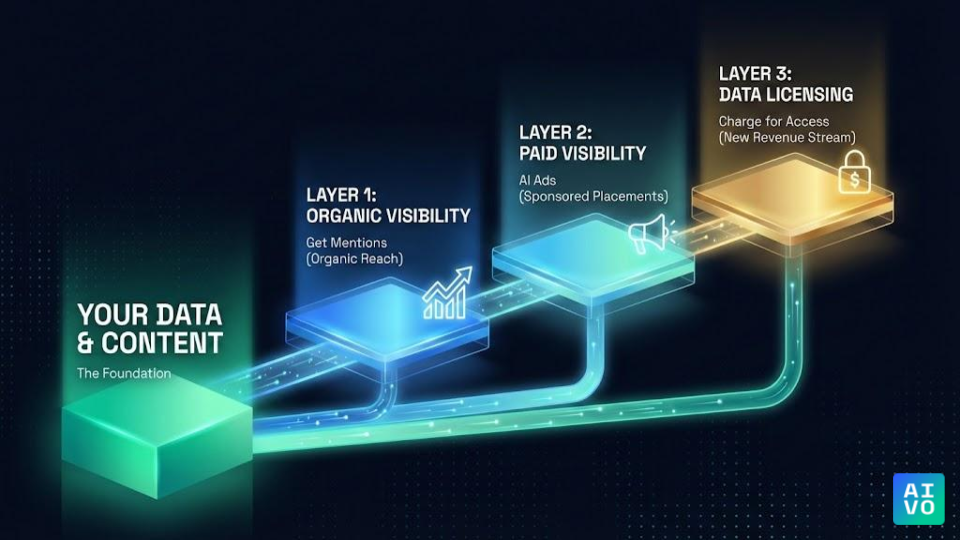
- Three monetization layers forming: organic visibility, paid visibility, and data licensing
The Old Model is Breaking
For 25 years, the internet ran on a simple exchange.
Platforms crawl your content. They send you traffic. You monetize that traffic.
Search engines, social platforms, and aggregators all operated on this model. SEO, paid search, and social advertising were built on top of it.
That exchange is breaking.
AI platforms scrape content but don't send traffic the same way. They summarize. They synthesize. Users get answers without visiting the source. The click-through rates on AI interfaces are brutal compared to traditional search.
The result? A whole new monetization layer is being built. Actually, three layers.
ChatGPT Ads Are Confirmed
On January 16-17, OpenAI confirmed they're testing ads for Free and Go ($8/month) tier users "within weeks." Paid tiers (Plus, Pro, Business, Enterprise) stay ad-free.
Here's the interesting part. OpenAI is calling it "answer independence." Their claim is that ads won't influence how ChatGPT generates responses. The ads will be "clearly labeled and separate from the AI's answer."
We'll see how that plays out in practice.
What this means for brands:
The ad model changes everything. When someone asks ChatGPT "what's the best CRM for a 10-person sales team under $100/month?" that's not a keyword. That's a buying committee briefing.
The targeting isn't demographic. It's contextual intent at the moment of decision. That's worth a premium.
The brands who go in first will pay that premium gladly because there's no competition yet. The brands who wait will pay the same premium later with 50 competitors in the auction.
Google Launched Checkout Inside AI Mode
On January 11-12, Google announced several major moves at once.
Universal Commerce Protocol (UCP): A new open standard co-developed with Shopify, Walmart, Target, Wayfair, and Etsy. It lets AI agents and retail systems talk to each other through the entire shopping journey.
Direct Offers: AI-powered personalized ads inside AI Mode. Not traditional search ads. These use AI to determine when a user is ready to buy and present discounts at the optimal moment.
Business Agent: Brands can now chat directly with shoppers inside Google Search using their own voice and AI.
In-conversation checkout: Users can now complete purchases without ever leaving the conversation. Pay via Google Wallet, with PayPal and other methods coming soon.
This is agentic commerce arriving faster than anyone expected.
What this means for brands:
The transaction is moving inside the conversation. If your checkout experience requires users to leave the AI interface, you're adding friction your competitors won't have.
Google Says Gemini Stays Ad-Free (For Now)
The same week Google announced ads everywhere in AI Mode, VP of Global Ads Dan Taylor said "there are no ads in the Gemini app and there are no current plans to change that."
Interesting strategy split. Search gets monetized. The assistant stays clean.
The distinction Google is making: AI Mode is for discovering information (including commercial interests). Gemini is for creation, analysis, and task completion.
What this means for brands:
Google is protecting Gemini's trust while monetizing search behavior. But notice the careful wording: "no current plans." That could change when competitive pressure increases or when they've trained users to accept ads in AI interfaces elsewhere.
Samsung Is Putting Perplexity on 800 Million Devices
This one flew under the radar for most marketers.
Samsung is integrating Perplexity AI into Bixby across smartphones, tablets, and TVs. The Galaxy S26 (launching February 2026) will ship with Perplexity as the default AI assistant for complex queries. They're even building a "Hey Plex" voice command.
Samsung TVs already have Perplexity. Galaxy users in the US get 12 months of free Perplexity Pro subscriptions.
The company projects 800 million AI-enabled devices in 2026, up from 400 million in 2025.
What this means for brands:
Distribution is the game most brands aren't thinking about yet.
When someone asks their Samsung TV for a product recommendation, will your brand show up? When someone says "Hey Plex, what's the best running shoe for flat feet?" is your product in that answer?
This isn't about optimizing for one platform anymore. It's about being visible across an ecosystem of AI touchpoints.
Wikipedia Signed Licensing Deals
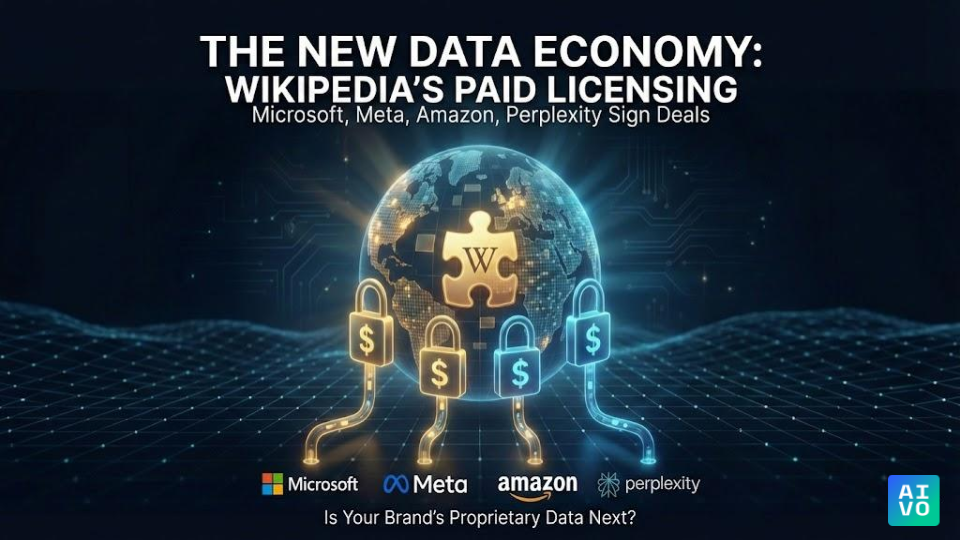
Wikipedia is now charging AI platforms for access to its data.
Read that again. The world's largest free encyclopedia is monetizing its content through licensing deals with the biggest AI players: Microsoft, Meta, Amazon, and Perplexity.
What this means for brands:
Data is becoming a paid asset. Layer 3 of AI monetization is emerging.
If Wikipedia can monetize access to AI platforms, what about your brand's proprietary content? Your product specifications, how-to guides, comparison data, and expert insights have value beyond just driving traffic.
This isn't theoretical. Publishers are already negotiating content licensing deals. Brands with unique, high-quality data will have options that generic content farms won't.
The Three Layers of AI Monetization
| Layer | Description | Status | Opportunity |
|---|---|---|---|
| Layer 1: Organic Visibility | Get mentioned in AI answers | Active now | First-mover advantage |
| Layer 2: Paid Visibility | Sponsored placements in AI | Launching Q1 2026 | Early advertisers win |
| Layer 3: Data Licensing | Monetize your content directly | Emerging | Requires scale |
Layer 1: Organic Visibility
This is where most of the "AI visibility" conversation lives today. Get mentioned in AI answers. Earn citations. Build authority so that when someone asks ChatGPT or Perplexity a question in your category, your brand shows up.
Layer 2: Paid Visibility
This layer is launching right now. ChatGPT ads. Google Direct Offers in AI Mode. Sponsored placements inside AI conversations. Early advertisers will see lower costs and less competition.
Layer 3: Data Licensing
This layer is emerging. Content creators charging AI platforms for access. Publishers negotiating licensing deals. Brands monetizing their proprietary data directly.
Implementation Roadmap
Immediate (Q1 2026)
[ ] Audit your current AI visibility across ChatGPT, Perplexity, Gemini, Claude, and Google AI Overview [ ] Structure your data with schema markup and clear product information [ ] Monitor the competitive landscape—who's showing up when AI recommends in your category?
Near-term (Q2-Q3 2026)
[ ] Prepare for paid placements with conversational ad formats [ ] Optimize for multi-platform distribution (Samsung + Perplexity is just the start) [ ] Build content assets specifically designed to be cited by AI
Long-term (2027+)
[ ] Consider your data licensing strategy [ ] Watch for protocol standardization (Google UCP vs OpenAI protocols) [ ] Plan for voice and device integration
---
FAQ Section
How do I know if my brand is visible in AI platforms?
The simplest approach is to test directly. Ask ChatGPT, Perplexity, Gemini, and Claude questions that your customers would ask. See if your brand appears. Or use our free AI Visibility Snapshot to get a structured analysis across multiple platforms.
Are ChatGPT ads available now?
Not yet. OpenAI said testing will begin "within weeks" for US users on Free and Go tiers. There's no self-serve ad platform announced yet. Early testing is with select advertisers in verticals like travel, retail, and technology.
Should I wait until ChatGPT ads launch to care about AI visibility?
No. Organic visibility (Layer 1) is foundational. The brands that build organic authority now will have better options when paid placements launch. And organic visibility doesn't go away once ads arrive. It becomes the baseline that paid amplifies.
What's the difference between AI Mode and Gemini?
AI Mode is Google's AI-powered search experience that integrates with traditional search. Gemini is Google's standalone AI assistant app. Google is putting ads in AI Mode but keeping Gemini ad-free for now. They serve different user intents.
How does the Samsung + Perplexity deal affect my SEO strategy?
It expands the surface area you need to optimize for. Perplexity has different citation patterns than ChatGPT or Google. Our research shows Perplexity has strong correlation with Brave Search results. Brands optimizing for Perplexity need to understand these source relationships.
What's Universal Commerce Protocol and why should I care?
UCP is Google's open standard for AI agents to interact with retail systems. It enables features like in-conversation checkout. If your e-commerce infrastructure isn't compatible with emerging protocols, you risk friction when customers want to buy through AI interfaces.
Is AI visibility the same as traditional SEO?
Related but different. Traditional SEO optimizes for search engine ranking pages. AI visibility optimizes for inclusion in AI-generated answers. There's overlap in fundamentals (quality content, authority signals, structured data), but the tactics and measurement differ.
How long does it take to improve AI visibility?
It depends on your starting point. Brands with strong existing authority can see improvements in 30-60 days. Brands starting from scratch need 3-6 months to build meaningful visibility. Unlike traditional SEO, there's no "ranking" to track. It's about citation frequency and context.
What's the biggest mistake brands make with AI visibility?
Ignoring it entirely. Most brands we talk to have never tested their AI visibility. They assume their existing SEO strategy covers it. It doesn't. AI platforms use different signals, cite different sources, and present information differently than search engines.
Where should I start if I have limited resources?
Start with an audit. Understand where you are today before investing in optimization. Our free snapshot tool gives you a baseline across multiple platforms in under 2 minutes.
Want to See Where You Stand?
Get your free AI Visibility Snapshot and understand your brand's position across ChatGPT, Perplexity, Gemini, and Google AI Overview. Takes 2 minutes. No sales call required.
Book an Intro: tryaivo.com
Key Takeaways
- The Old Model is Breaking: AI platforms scrape content but don't send traffic the same way traditional search does
- Three Monetization Layers Emerging: Organic visibility (active now), paid visibility (launching Q1 2026), and data licensing (emerging)
- ChatGPT Ads Confirmed: Testing begins "within weeks" for Free and Go tiers with contextual intent targeting
- Google's Agentic Commerce: Universal Commerce Protocol enables in-conversation checkout without leaving AI interface
- Distribution Expansion: Samsung + Perplexity deal puts AI search on 800 million devices in 2026
- Data as Asset: Wikipedia's licensing deals signal brands can monetize proprietary content directly
- First-Mover Advantage Real: Brands building organic authority now will have better options when paid placements launch
- Action Required Now: Audit AI visibility, structure data properly, and monitor competitive landscape immediately
Sources
- OpenAI confirms ChatGPT ads coming "within weeks" (January 2026)
- Google announces Universal Commerce Protocol with Shopify, Walmart, Target (January 11-12, 2026)
- Samsung-Perplexity partnership announcement (January 2026)
- Wikipedia licensing deals with Microsoft, Meta, Amazon, Perplexity (January 2026)
- Google VP Dan Taylor on Gemini remaining ad-free (January 2026)
Author: Sebastian Pinzon is Co-Founder of AIVO, an AI Visibility Optimization consultancy helping mid-market e-commerce brands get discovered by AI engines. With 15+ years of experience at major agency holding companies (Publicis, WPP, OMG), he's now focused on helping brands navigate the zero-click future.
Connect on LinkedIn | tryaivo.com


